

Project Overview
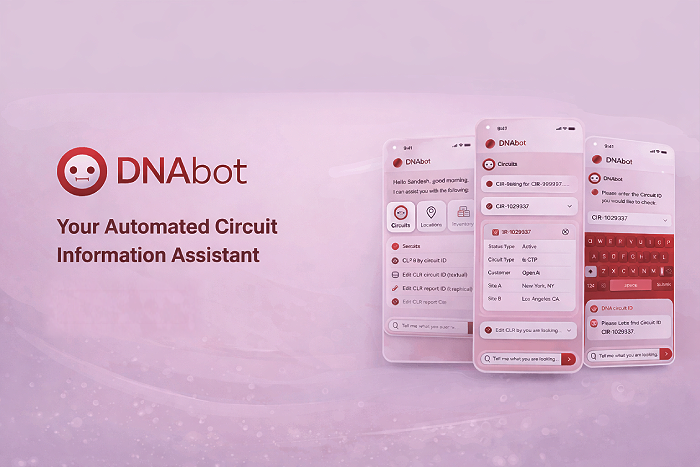
DNA BOT is an AI-powered conversational platform built to support network engineers, operations teams, and service-compliance stakeholders in executing complex, high-risk telecom and digital network tasks. The platform enables users to interact with circuits, inventory, orders, tickets, and regulatory workflows through natural, intent-driven conversations—removing the need for command memorization or constant system switching.
As the Lead Product Designer, I drove the project end to end with hands-on ownership of product design, using the EDIPT tool to design, prototype, and validate conversational flows, interaction patterns, and reusable UI systems. I worked closely with product, engineering, and AI teams to ensure the solution was scalable, explainable, and operationally trustworthy.
PROBLEM
Network and telecom teams operate in regulated, high-stakes environments where accuracy, speed, and auditability are critical. However, existing tools were built on legacy, command-heavy interaction models that created significant friction.
-
Key challenges included:
- Fragmented workflows across circuits, inventory, locations, orders, and tickets
- High cognitive load from dense tables and manual query construction
- Frequent context switching across multiple enterprise systems
- No intelligent guidance for next steps or workflow progression
- Opaque system behavior leading to trust and compliance concerns
- Heavy reliance on training, documentation, and tribal knowledge
These issues resulted in slower execution, higher error rates, operational fatigue, and reduced confidence in system outcomes.
GOAL
Establish clear executive ownership of UX intent from strategy through implementation while reducing operational dependency on vendors. The objective was to enable faster, safer iteration within platform constraints and ensure that all experiences shipped were compliant, on-brand, accessible, and scalable—without compromising delivery speed.
MY ROLE
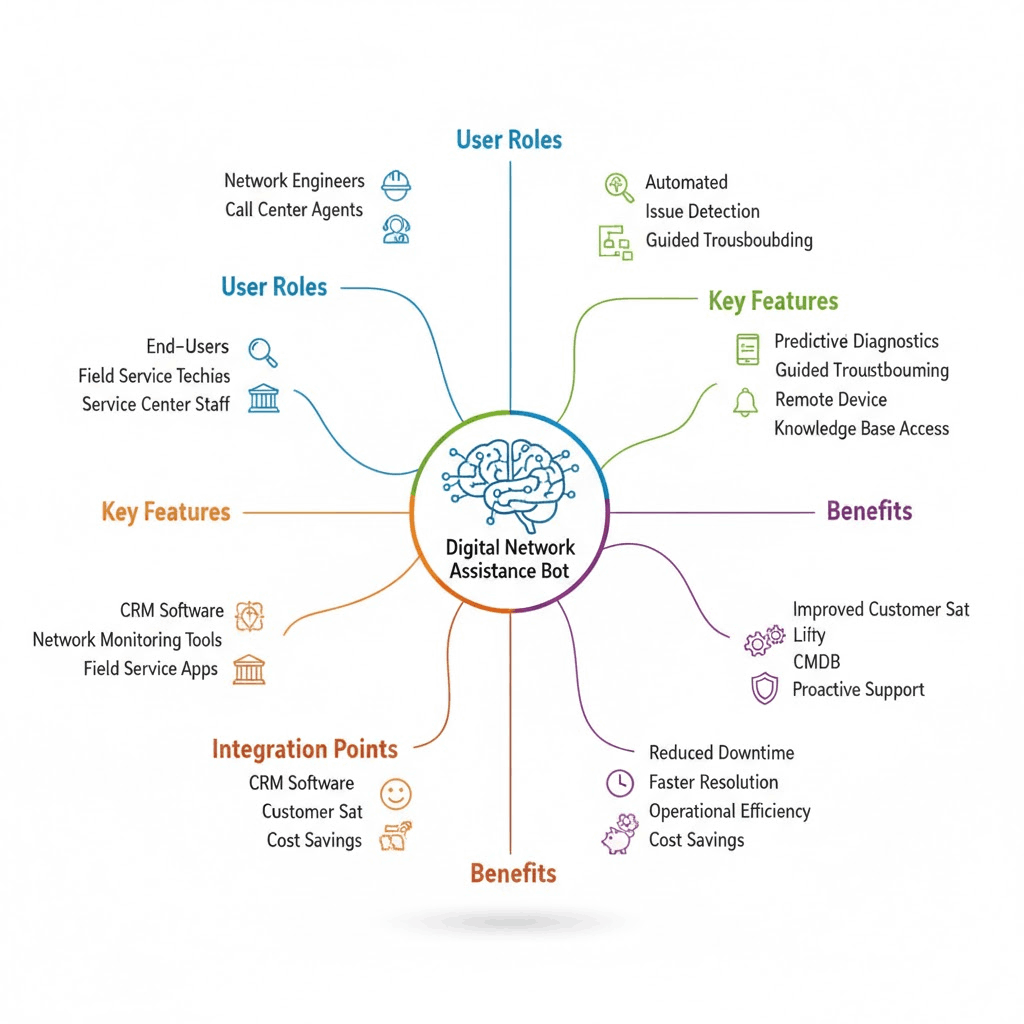
When the Network AI Bot initiative began, I took on the role of Senior Lead Product Designer with end-to-end ownership of the experience vision and execution. The goal was to design a conversational system that network and operations teams could trust in regulated, high-stakes environments. I worked hands-on to translate complex workflows, platform constraints, and compliance requirements into clear, usable conversational patterns grounded in real operational needs.
Alongside this, I served as the design authority, partnering closely with product, engineering, and AI/ML teams to guide decisions from strategy through delivery. By establishing strong design governance and alignment across teams, I ensured the Network AI Bot evolved as a reliable, enterprise-grade operational assistant rather than an experimental AI feature.
Responsibilities
- Lead Product Designer driving end-to-end AI conversational UX
- Hands-on design and prototyping using EDIPT
- Conversational UX strategy, interaction rules, and component systems
- Workflow mapping for network, order, and compliance teams
- Cross-functional collaboration with Product, Engineering, and AI stakeholders
User Research & Persona Definition
Designing an effective solution required a deep understanding of user context, behavior, and constraints. Given the complexity of the domain and the wide variance in user confidence, digital literacy, and financial understanding, user research was a critical foundation for all design decisions.
-
Research Approach
- Identify user motivations, pain points, and emotional states across the journey
- Uncover friction points in existing digital experiences and offline alternatives
The research phase was structured around three core objectives:
-
Research Methods
- Stakeholder interviews to align on constraints and success metrics
- User interviews across varying knowledge and confidence levels
- Journey walkthroughs to identify friction and hesitation points
- Review of support data and analytics to validate patterns at scale
Key Insights
Personas
Personas were created based on behavioral needs rather than demographics, capturing goals, knowledge levels, pain points, and support expectations. They were designed to be scalable and reusable across features and future releases.
Impact on DesignPersonas actively informed flow design, content hierarchy, help patterns, and error handling—ensuring decisions consistently reflected real user needs while balancing business and regulatory requirements.

- Explores options before taking action
- Consumes detailed information
- Seeks reassurance and validation
- Clear, step-by-step guidance
- Plain, non-technical language
- Contextual prompts and confirmations
- Scans content quickly
- Operates under time constraints
- Focused on outcomes and efficiency
- Quick filters and shortcuts
- Concise, actionable responses
- Minimal friction to task completion
- Prioritizes speed over exploration
- Mobile-first usage patterns
- Repetitive, high-frequency actions
- Streamlined conversational flows
- Fast, low-input interactions
- Optimized forms with smart defaults
Implication for the AI/ML Bot
The assistant was designed to adapt its tone, depth, and interaction model based on user intent—offering reassurance and guidance for exploratory users, efficiency for experienced professionals, and speed for high-volume users.
User Journey Map
Candidates discover and evaluate roles based on clarity, relevance, and trust in the employer brand. They assess growth signals, eligibility, and role fit, then complete a frictionless application aligned to their context and device. Post-application communication and visibility play a critical role in shaping confidence and long-term employer perception.

APP MAP
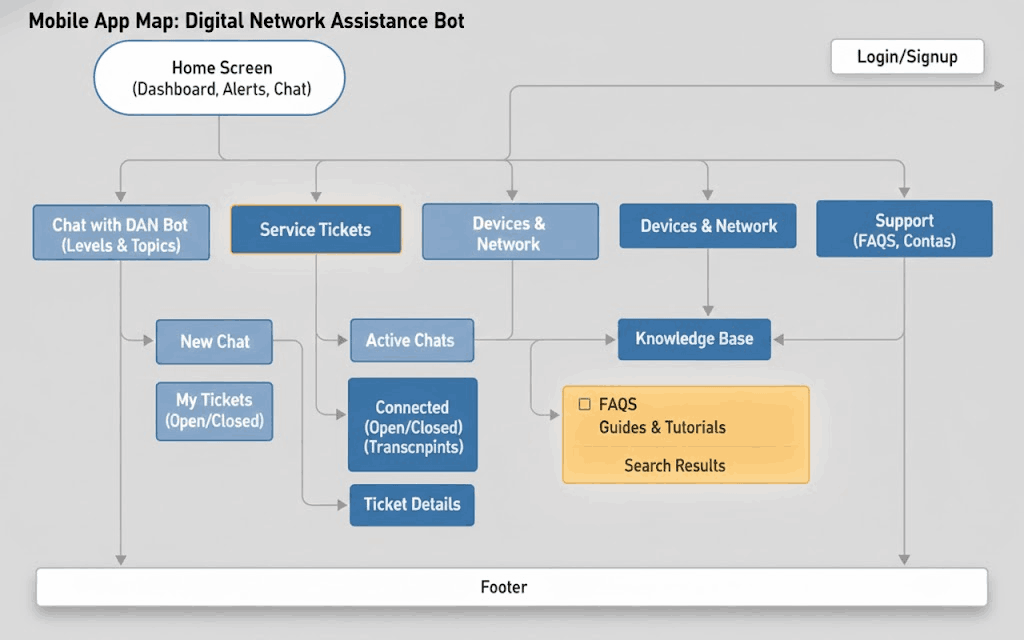
The digital network assistance experience was developed through structured brainstorming and model-mapping sessions, where I partnered with product, data, and engineering teams to evaluate intent-detection models, conversational depth, and fallback strategies. We defined an adaptive information architecture driven by user intent, confidence signals, and behavioral patterns—ensuring the AI assistant delivers the right level of guidance, personalization, and efficiency across assistance journeys.
STORYBOARDING
Storyboards were leveraged to isolate and validate the highest-impact moments in the candidate journey, ensuring early alignment across stakeholders and reducing downstream rework during vendor implementation.
PAPER WIREFRAME
The DNA (Digital Network Assistance) bot flows were explored through paper prototyping and guided ideation sessions, allowing teams to rapidly test conversational structures, intent paths, and fallback scenarios. This approach helped us converge on a clear, scalable information architecture that balanced simplicity and usability before moving into AI model training and high-fidelity design.

DIGITAL WIREFRAME
Digital wireframes translated validated paper prototypes into structured conversational and interaction models for the DNA (Digital Network Assistance) bot. I defined intent flows, response hierarchies, and escalation paths to ensure clarity, scalability, and consistent user guidance—establishing a strong foundation for AI logic, training, and high-fidelity design.
Usability Studies
Digital Network Assistance (AI/ML Bot)
Usability studies were conducted to validate how users interact with the DNA AI/ML assistant across discovery, guidance, and task-completion scenarios. I guided the team in running unmoderated usability testing using defined assistance personas to assess real-world intent expression, confidence levels, and expectation from an AI-driven experience.
Study Overview
- 6 participants aligned to the primary assistance persona
- 5 critical tasks: intent initiation, guided discovery, clarification prompts, task execution, and confirmation
- Focus areas: intent accuracy, response clarity, trust, and flow efficiency
The study generated 30+ qualitative insights, synthesized into 4 key themes that informed conversational design, response depth, and fallback strategies—helping reduce friction and improve trust in the AI assistant ahead of launch.
Outcome
The usability findings directly influenced intent design, conversational hierarchy, and response strategies, ensuring the DNA bot adapts effectively to user confidence, intent clarity, and task complexity—resulting in a more predictable, trustworthy, and efficient assistance experience.
Refining & Final UI
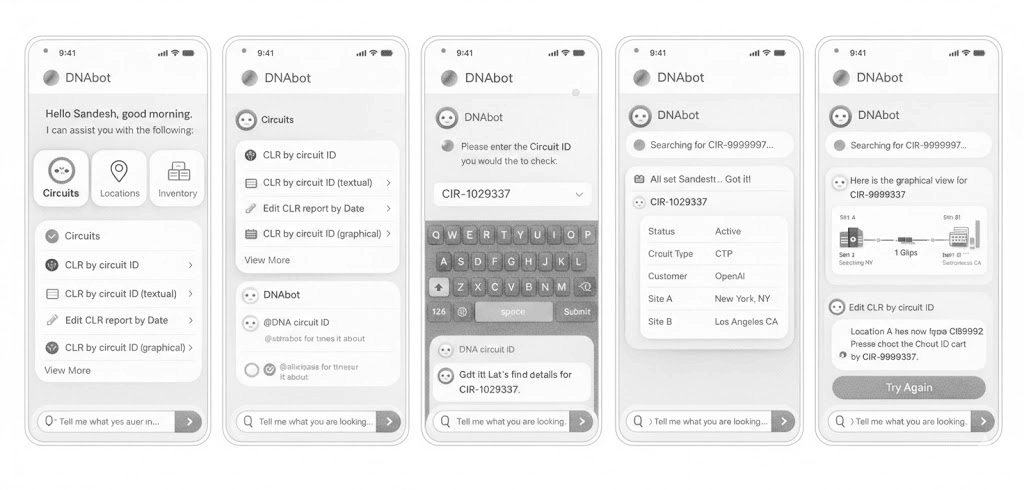
Final designs were reviewed and validated against defined UX and AI governance guardrails, ensuring consistency across conversational behavior, model outputs, regulatory requirements, and brand tone. The outcome was a digital network assistance platform designed and governed as a long-term intelligent system—rather than a set of isolated conversational flows or responses.
