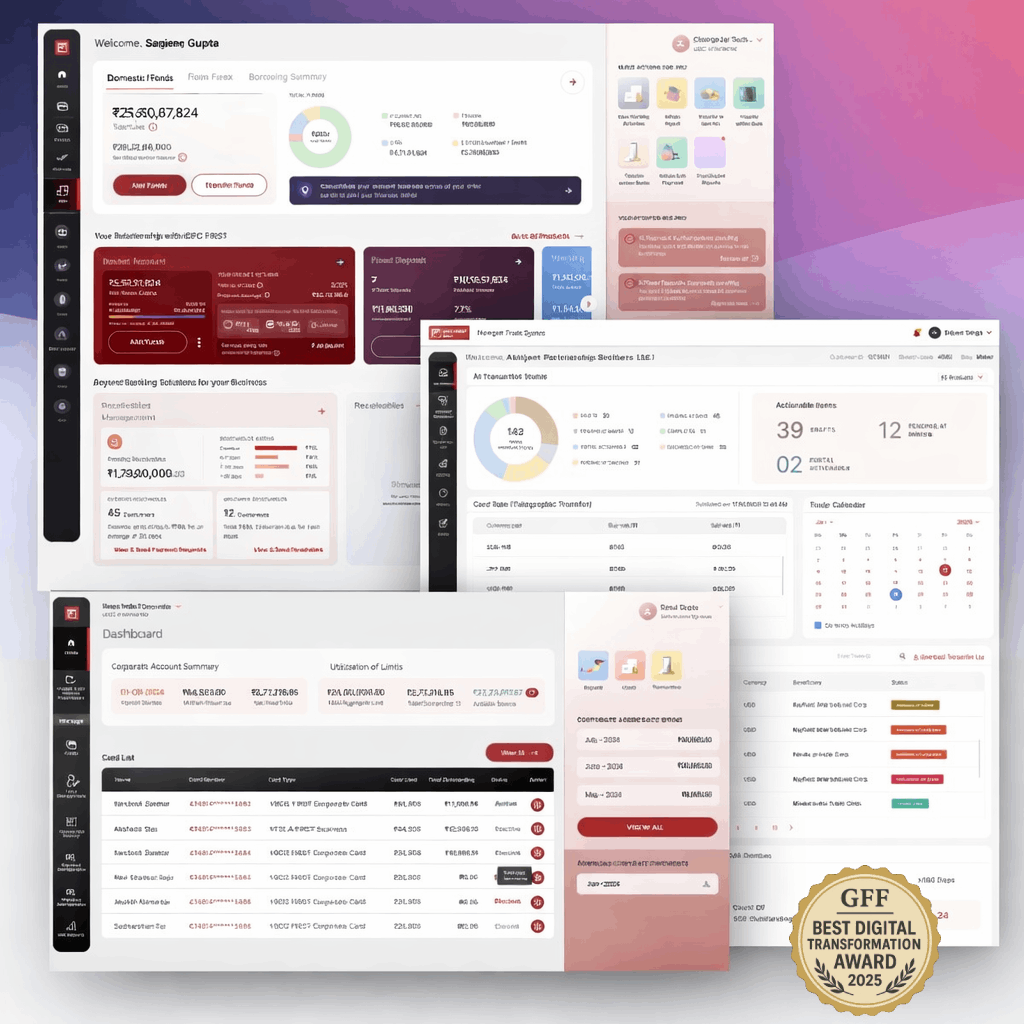

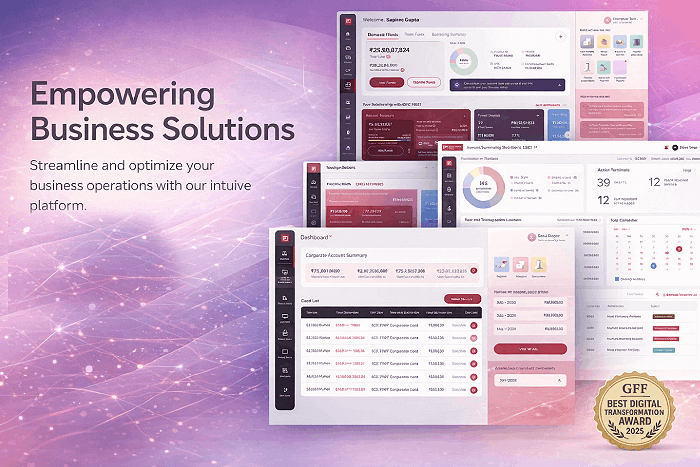
Project Overview
Enterprise applications form the operational backbone of a bank—supporting customer servicing, risk assessment compliance, and internal decision-making under constant regulatory scrutiny and time pr This case study outlines how I led, directed, and governed the UX transformation of multiple mission-critical enterprise applications, focusing on workflow clarity, consistency at scale, and UX governance, rather than surface-level visual redesign.
The mandate was to reduce operational friction, improve reliability, and ensure enterprise UX quality across teams, vendors, and platforms.
The Challenges
Over time, enterprise systems had evolved organically, resulting in:
-
The mandate at leadership level was to:
- Fragmented workflows across applications
- Inconsistent UI patterns driven by multiple vendors
- High cognitive load for routine, repeatable tasks
- Heavy dependency on training and tribal knowledge
Individually, systems functioned. Collectively, they introduced inefficiency, risk, and usability debt. The challenge was not modernization—but rethinking how work actually happens inside the bank.
Role & Accountability
I owned direction, decision-making, governance, and final sign-off across the enterprise UX transformation.
-
Responsibilities included:
- Driving a shared enterprise UX vision across products
- Leading cross-functional brainstorming and alignment sessions
- Establishing UX standards, principles, and governance models
- Reviewing and approving workflows, patterns, and designs
- Holding final accountability for experience quality and consistency
I worked closely with Operations, Risk, Compliance, Product, Engineering, and external vendors to ensure UX decisions aligned with real operational realities and regulatory expectations.
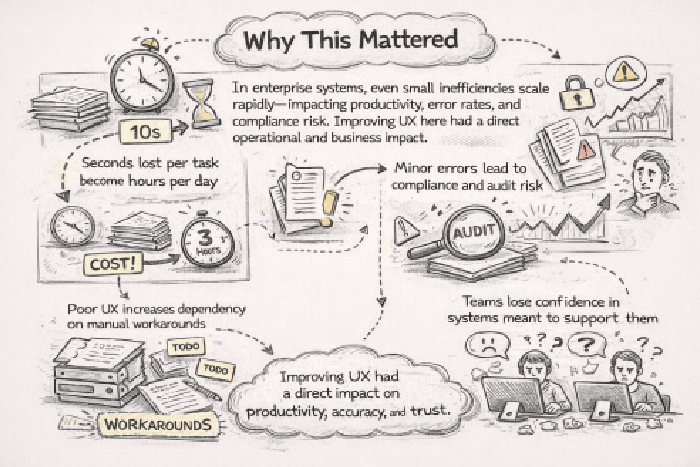
Why This Mattered
In enterprise environments, small UX inefficiencies scale rapidly:
- Seconds lost per task compound into hours per day
- Minor errors increase compliance and audit risk
- Poor UX drives manual workarounds and shadow processes
- Teams lose trust in systems meant to support them
Improving UX here had a direct impact on productivity, accuracy, and operational confidence.
Understanding Users
Enterprise UX was intentionally approached through roles, responsibilities, and operational risk, rather than demographics. As Head of UX, I directed the team to understand how different functions operate under regulatory pressure, time constraints, and accountability requirements—and how design decisions directly influence accuracy, efficiency, and compliance.
Risk & Compliance Teams
These users are detail-oriented and audit-facing. Their work demands absolute clarity, traceability of actions, and confidence that systems support regulatory review. UX decisions for this group prioritized explicit system feedback, clear data provenance, and predictable workflows that minimize interpretive risk.
Risk & Compliance Teams
These users operate under constant context switching, often moving between multiple systems while serving customers in real time. The experience was designed to reduce cognitive load, surface relevant information quickly, and maintain consistency across tools—allowing users to act with speed and confidence under pressure.
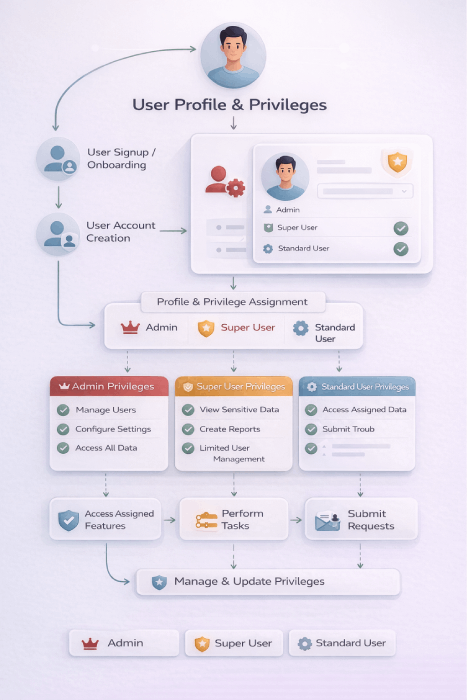
Admins & Super Users
Power users manage exceptions, overrides, and configurations that directly affect downstream operations. For this group, UX focused on control, visibility, and safe handling of edge cases, ensuring complex actions remained understandable, reversible, and auditable.
Designing for these roles required prioritizing clarity over cleverness, predictability over novelty, and error prevention over visual experimentation—reinforcing enterprise UX as a reliability discipline, not a branding exercise.
Key Insights
Research and operational reviews revealed that users were compensating for system gaps by relying on memory, experience, and informal workarounds—where systems should have provided clear guidance and structure. Screens were consistently organized around system features rather than real user tasks, increasing cognitive load and slowing execution.
Inconsistent patterns across applications forced users to relearn behaviors each time they moved between tools, creating friction and avoidable errors. These issues were most visible during handoffs and edge cases, where ambiguity and lack of system support led to mistakes and compliance risk.
Collectively, these insights reinforced that the problem was systemic, requiring enterprise-level UX governance and shared standards, rather than isolated, screen-by-screen fixes.
Design Principles (Leadership-Aligned)
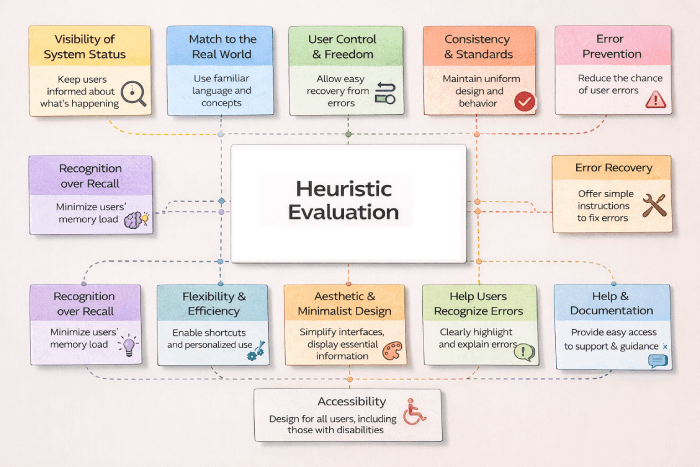
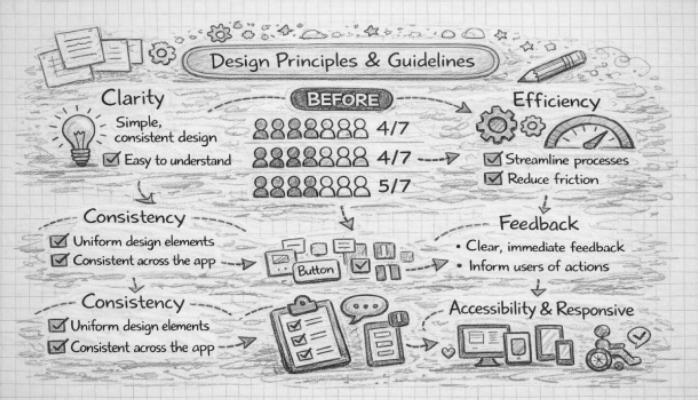
To address systemic enterprise UX challenges, I led alignment on a concise set of non-negotiable design principles that governed decision-making across discovery, design, delivery, and vendor execution. These principles were not aspirational—they were used as review and sign-off criteria to ensure consistency, usability, and risk reduction at scale.
- Task Over Feature
- Reduce Cognitive Load
- Consistency Builds Trust
- Design for Failure Scenarios
- Governance by Default
Experiences were designed around real operational tasks rather than system capabilities, ensuring workflows reflected how work is actually performed.
Clear information hierarchy, meaningful defaults, and progressive disclosure were used to minimize mental effort and decision fatigue.
Shared interaction patterns and layouts were enforced across applications and vendors to reduce relearning and build user confidence.
Validation, error prevention, and recovery paths were treated as first-class design concerns, especially for edge cases and handoffs.
UX standards were embedded into delivery processes, design reviews, and approvals to ensure long-term consistency and quality.
These principles enabled the organization to move from isolated improvements to a cohesive, governed enterprise UX system.
The Approach
- Workflow Mapping
- Pattern Definition
- Rapid Prototyping
- Systemization
Mapped real operational tasks across tools to identify duplication, friction, and risk points.
Created standardized layouts and interaction patterns for tables, forms, filters, and navigation.
Tested redesigned workflows with real users under realistic constraints.
Embedded patterns into a shared enterprise design system and delivery checklist.
The Solution
The outcome was not a single product redesign, but the establishment of a shared enterprise experience model—designed to scale across applications, teams, and vendors while reducing operational risk.
- Predictable page structures across applications
- Unified interaction patterns across vendors
- Reduced reliance on user memory
- Improved UX adoption across teams
Common layouts and content hierarchy ensured users always knew where to look and what to expect, regardless of the system they were using.
Standardized behaviors for tables, forms, filters, and navigation eliminated inconsistency introduced by vendor-led implementations.
Systems were designed to guide users through tasks with clear cues, defaults, and feedback, minimizing dependence on training or tribal knowledge.
Consistent experiences increased user confidence, reduced resistance to change, and accelerated adoption across operational teams.
Together, these changes transformed fragmented tools into a cohesive, reliable enterprise UX system that supports efficiency, accuracy, and long-term scalability.
Results & Impact
- Reduced task completion time through clearer workflows and predictable interaction patterns.
- Lower operational error rates by designing for validation, edge cases, and failure scenarios.
- Reduced training dependency by embedding guidance, defaults, and consistency into the system.
- Improved UX adoption across teams due to increased confidence and reduced relearning.
- Stronger UX adoption across teams and vendors by enforcing shared standards and governance.
From a Head of UX perspective, the impact extended beyond usability metrics. The program established UX as a strategic capability within the organization—shifting enterprise design from isolated fixes to a governed, scalable system with clear accountability for quality and long-term experience health.
Reflection
Great enterprise UX disappears. It enables people to focus on decisions, not interfaces—making systems reliable, predictable, and trusted.
Refining & Final UI
Final designs were reviewed and validated against defined UX and AI governance guardrails, ensuring consistency across conversational behavior, model outputs, regulatory requirements, and brand tone. The outcome was a digital network assistance platform designed and governed as a long-term intelligent system—rather than a set of isolated conversational flows or responses.