

Project Overview
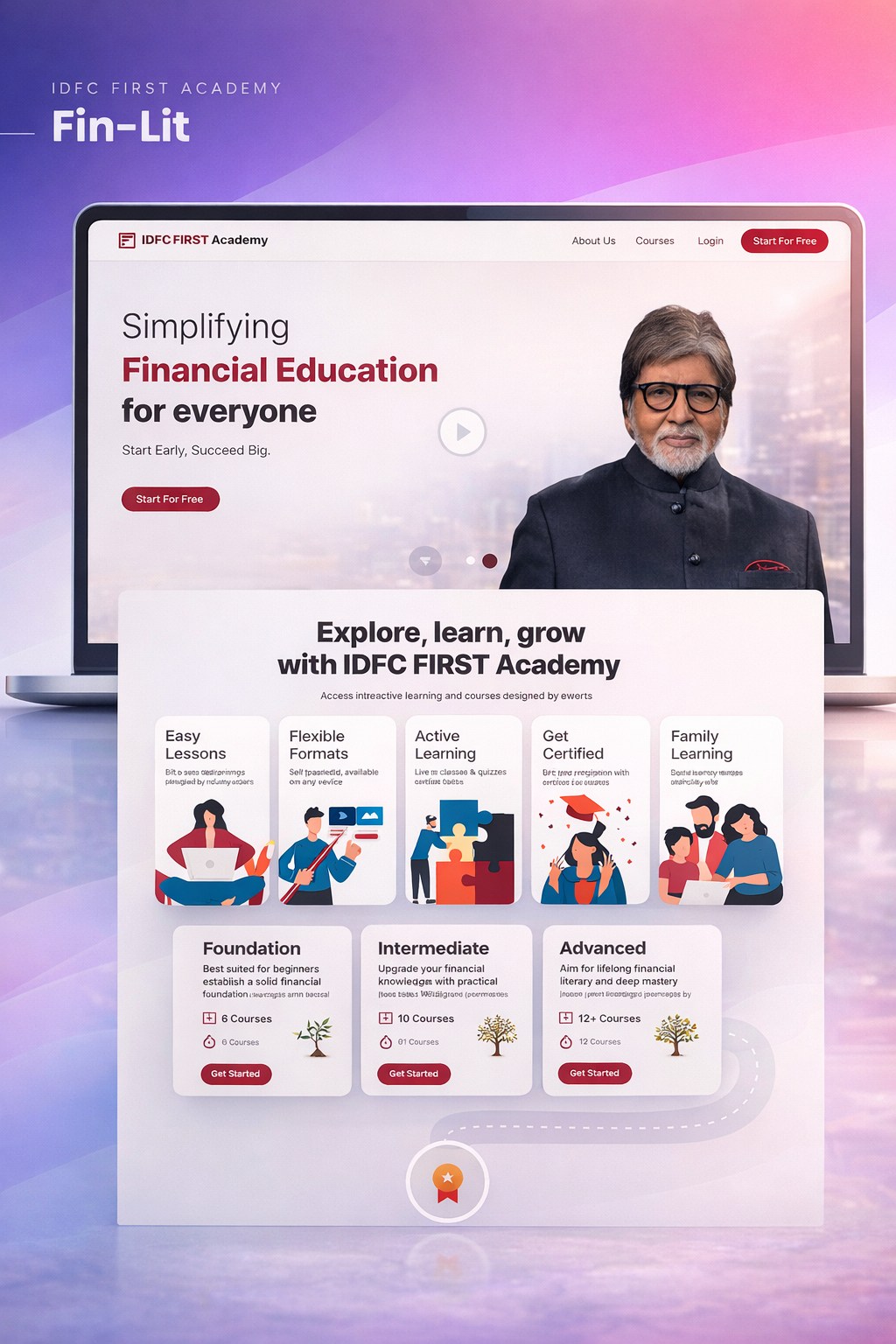
IDFC FIRST Academy was initiated as a strategic investment in long-term customer trust, financial inclusion, and brand leadership. The ambition extended well beyond launching a financial literacy website. The mandate was to design an enterprise-grade learning platform capable of educating diverse audiences at scale while operating under stringent regulatory and compliance constraints.
As VP of UX, I was accountable for defining the experience vision, governing execution across teams and vendors, and ensuring that every design decision reinforced trust, clarity, and learning effectiveness. My role required balancing business goals, regulatory accountability, and user needs—while building a system that could scale sustainably across time, products, and contributors.
Research-Led Problem Framing
Early discovery surfaced that financial literacy initiatives in large banks often fail not because of content gaps, but due to systemic organizational patterns:
-
Content-First Thinking
- Information is published without designing learning journeys, progression, or measurable outcomes. Users consume content but do not build understanding. Fragmented Ownership
- Responsibility is split across marketing, compliance, product teams, and external vendors, resulting in inconsistent experiences, duplication, and slow evolution. Compliance-Driven Fear
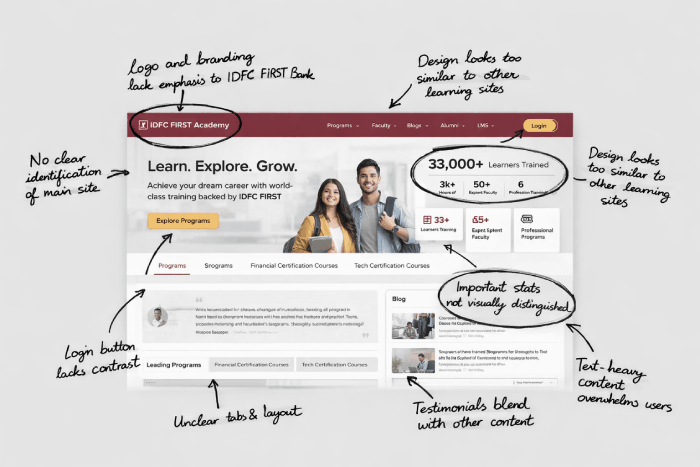
- Regulatory requirements are implemented defensively, increasing cognitive load and reducing engagement—ironically weakening trust rather than strengthening it.
These insights reframed the challenge: success would not come from better content, but from better experience governance.
Experience Strategy & Principles
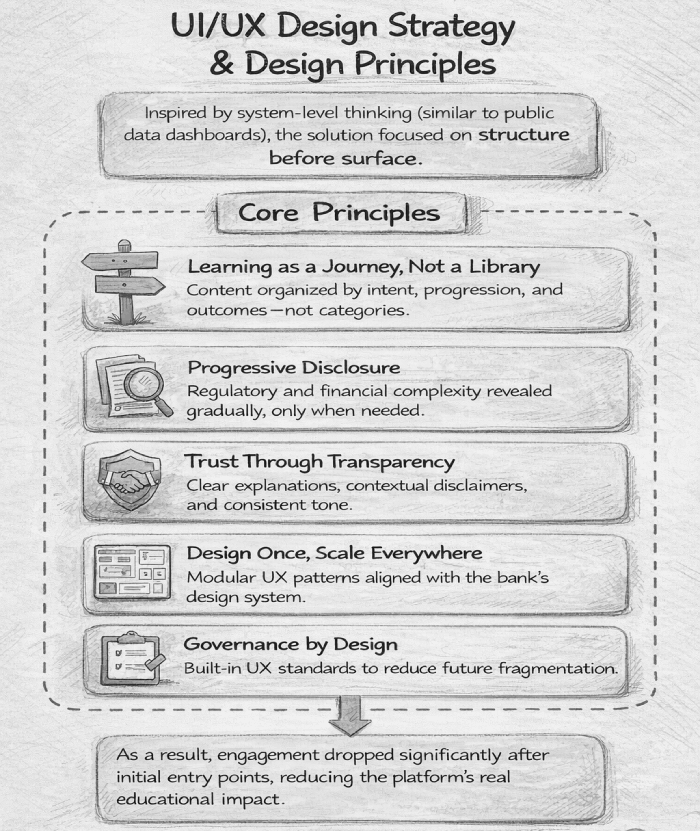
- Reduce cognitive load by guiding users through complex tasks with clear, step-by-step conversational flows.
- Progressive Disclosure
Financial and regulatory complexity revealed only when relevant to the user’s context. - Embed trust and transparency hrough explicit intent validation, confirmations, and explainable actions.
- Trust Through Transparency
Clear explanations, contextual disclaimers, and consistent tone replaced defensive messaging. - Design Once, Scale Everywhere
Modular UX patterns aligned to the bank’s design system ensured reuse and consistency. - Governance by Design
Standards embedded into the system to prevent fragmentation as the platform scaled.
These principles served as decision filters during reviews and sign-offs.
Experience Architecture
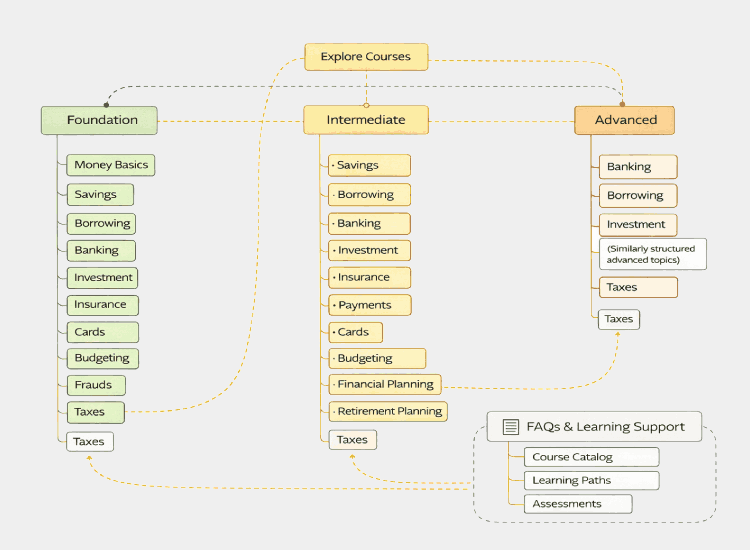
- Intent-based entry points (learn basics, solve a problem, explore deeper topics)
- Structured learning paths with visible progress and milestones
- Standardized content templates to improve comprehension and retention
- Unified interaction patterns across all modules and programs
The platform was reframed as a learning ecosystem rather than a content portal:
This architecture ensured consistency while allowing future expansion without redesig.
Leadership Challenge
The core leadership question was:
How do we design a financial education platform that is compliant by design, engaging by default, and scalable by governance—without slowing delivery or increasing risk?
This required shifting the organization’s mindset from publishing content to operating a learning system.
My Role
UX & Product Design Leadership
Scope:
Experience Vision, Governance Model, Cross-Functional Leadership, Quality Assurance, and Final Sign-off
Stakeholders:
Business, Product, Engineering, Compliance, Legal, External Vendors
I led the UX vision and execution across the platform, working closely with cross-functional leadership to translate complex regulatory, educational, and operational requirements into a coherent, user-centric experience. My responsibility extended beyond screens into decision frameworks, experience standards, and long-term scalability.
RSEARCH & INSIGHT
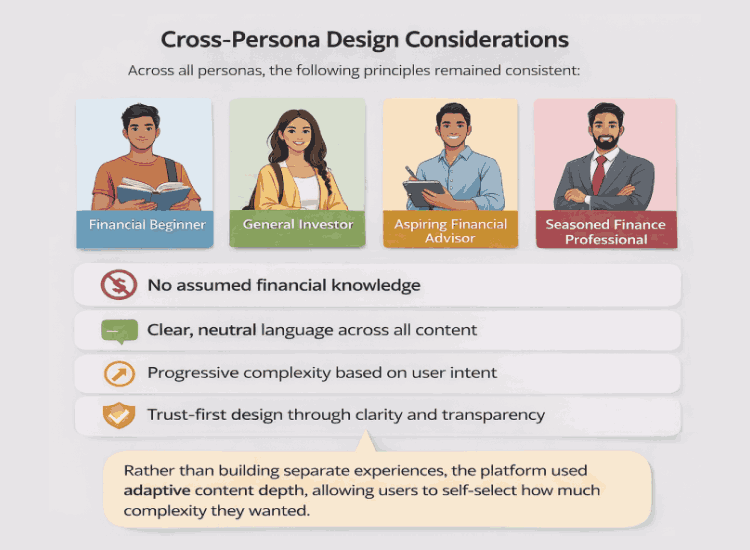
Research revealed that while user confidence levels varied, expectations around clarity, trust, and control were consistent across all personas. Users had uneven financial knowledge and disengaged when assumptions were made or language became overly technical. Plain, neutral language significantly improved comprehension and reduced perceived risk.
Users did not resist complexity; they resisted forced complexity. Progressive disclosure, driven by user intent, increased engagement and confidence. Rather than creating fragmented persona-based experiences, the platform adopted adaptive content depth, allowing users to choose how much detail they needed. This approach improved scalability, reduced cognitive load, and reinforced trust across all user groups.
Design Challenge
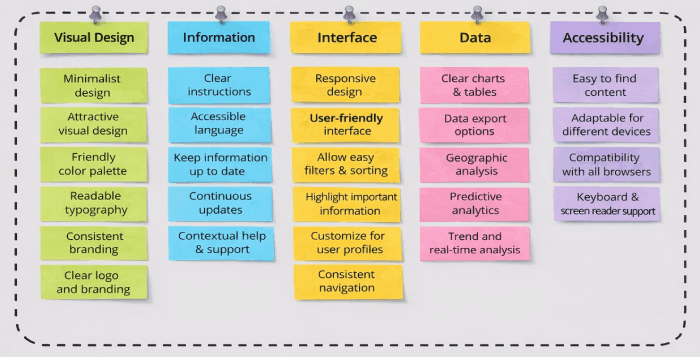
How might we design a financial literacy platform that:
- Educates users without overwhelming them.
- Maintains regulatory clarity without killing engagement.
- Scales across topics, contributors, and future programs.
- Builds trust through clarity, not just branding
- Works equally well for first-time learners and advanced users.
As a result, engagement dropped significantly after initial entry points, reducing the platform’s real educational impact.
User Journey Map
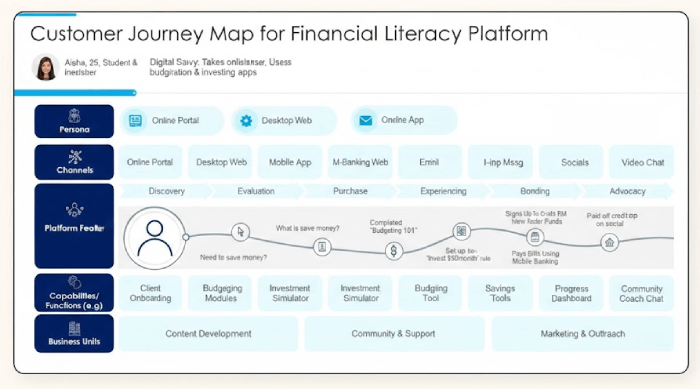
Candidates discover and evaluate roles based on clarity, relevance, and trust in the employer brand. They assess growth signals, eligibility, and role fit, then complete a frictionless application aligned to their context and device. Post-application communication and visibility play a critical role in shaping confidence and long-term employer perception.
Execution Approach
-
Discovery & Sense-Making
- Audited existing content, journeys, and analytics
- Identified drop-off points and comprehension gaps
- Consistent content templates for readability and comprehension
- Mapped regulatory requirements to user moments
-
Prototyping & Validation
- Rapid iteration on information hierarchy and flows
- Early validation with internal users and stakeholders
- Refinement before large-scale rollout
-
Systemization
- Documented patterns and guidelines
- Integrated learnings into the broader design system
- Established review checkpoints for future content
As a result, engagement dropped significantly after initial entry points, reducing the platform’s real educational impact.
Governance & Execution Model
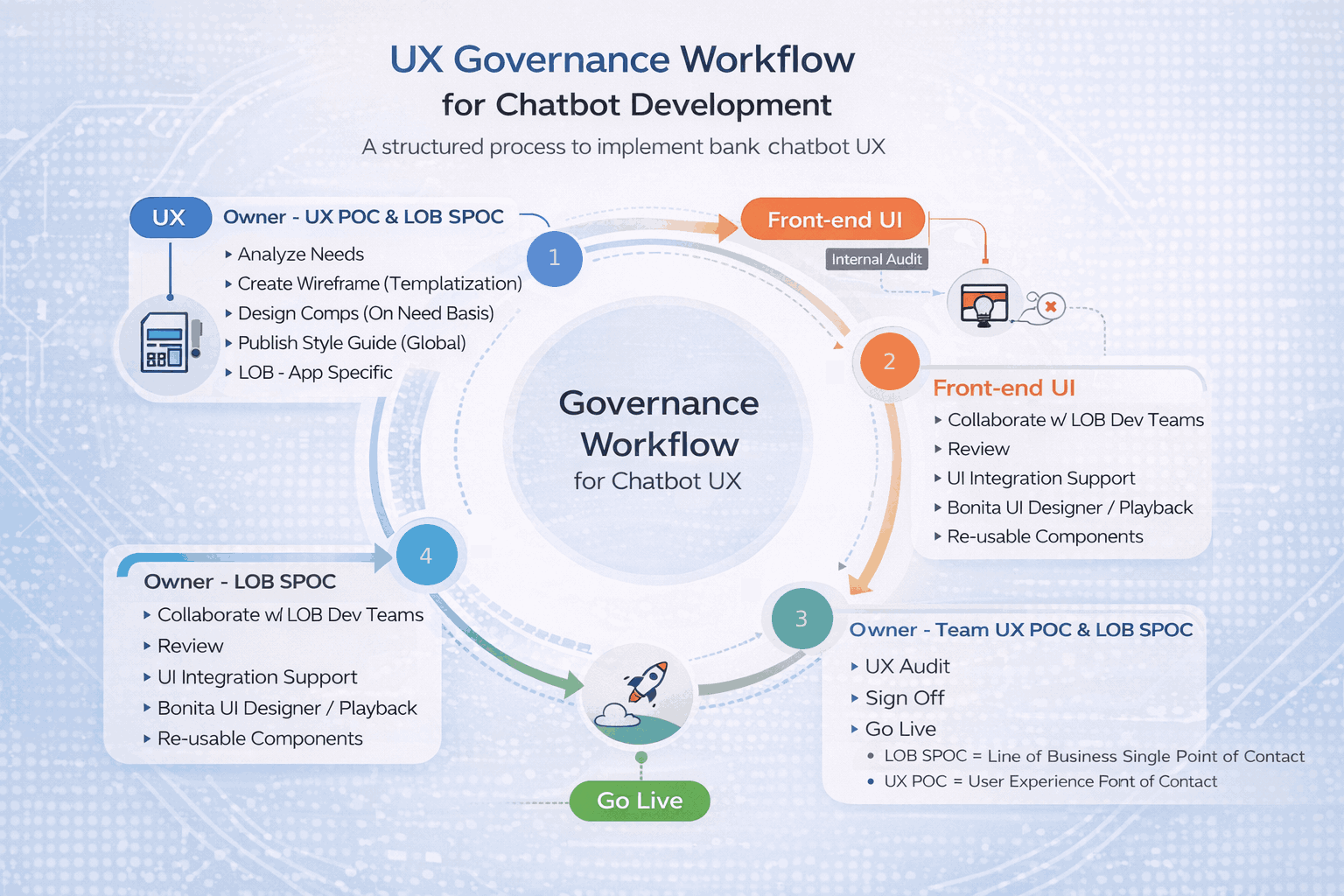
Defined and owned the governance and execution model to ensure the finance literacy platform delivered credible, inclusive, and scalable learning experiences while meeting regulatory and organizational expectations.
I established UX-led standards that governed content clarity, interaction design, and accessibility—ensuring no assumed financial knowledge and consistent progression from basic to advanced learning. Regulatory and policy requirements were translated into reusable design patterns and content frameworks, embedding compliance directly into the user experience rather than treating it as a downstream check. Clear ownership and review mechanisms were put in place across UX, product, content, and compliance teams to enable informed and defensible design decisions.
Execution Model
Defined and owned the governance and execution model to ensure the finance literacy platform delivered credible, inclusive, and scalable learning experiences while meeting regulatory and organizational expectations.
I led a modular, design-system-driven execution model that allowed teams to build independently within shared guardrails. Research and usability insights continuously informed design iterations, with regular validation to ensure comprehension, trust, and engagement. By aligning design, development, and content workflows, I enabled faster delivery while maintaining experience consistency and quality at scale.
This approach positioned UX as a strategic control point, balancing learner needs, business goals, and regulatory accountability while enabling the platform to evolve confidently over time.
Final Demo
my focus for this platform was to ensure finance literacy experiences are clear, trustworthy, and scalable. The design embeds governance directly into the user journey, guiding learners progressively without assuming prior financial knowledge. Through a modular design system and UX-led standards, teams were able to execute efficiently while maintaining consistency, accessibility, and regulatory alignment. The final outcome demonstrates how UX can balance education, trust, and execution at scale.