Client Overview
Wells Fargo is a global financial services organization and one of the largest banks in the United States. At the time of engagement, the organization served millions of customers across retail and commercial banking through a complex ecosystem of enterprise systems.
FXOL / iFXOL (Foreign Exchange Online) was a mission-critical platform enabling institutional users to perform spot and forward foreign exchange transactions, manage currency exposure, and access multi-currency settlement and reporting capabilities.
Business Need
- Highly complex workflows created high cognitive load for frequent FX users
- Inconsistent screens and interaction patterns across modules
- Business and functional requirements evolving in parallel with UI redesign
- Need for scalable, long-term UX solutions aligned with enterprise standards
Wells Fargo engaged MphasiS Usability Engineering to modernize the user experience while improving efficiency, usability, and consistency across the FXOL platform.
Business Objectives
- Reduce user memory load through recognition-based UI patterns
- Standardize screen elements across the application
- Improve task efficiency for high-frequency users
- Create a scalable UI foundation for future enhancements
- Increase flexibility without compromising performance
My Role
Reducing user memory loadI directly owned the application of recognition-based UX principles across FXOL / iFXOL workflows. This included simplifying screen layouts, introducing consistent labeling and grouping, and ensuring users could recognize actions and patterns across modules rather than rely on recall—significantly reducing cognitive load for high-frequency FX users.
Standardizing screen elements and interaction patternsPlayed important role in implementation of consistent UI components and interaction behaviors across the platform. This standardization addressed long-standing inconsistencies between modules and created a predictable experience that improved learnability and reduced user errors.
Improving task efficiency for frequent usersI designed and refined task-driven workflows for critical FX operations, minimizing unnecessary steps, optimizing screen flow, and prioritizing high-value actions. The focus was on enabling expert users to complete transactions faster without compromising accuracy or control.
Establishing a scalable UX foundationI owned the creation of reusable layout structures and UI components that could be extended across the FXOL ecosystem. These patterns provided a long-term UX foundation that supported future enhancements without requiring repeated redesign efforts.
Design Execution
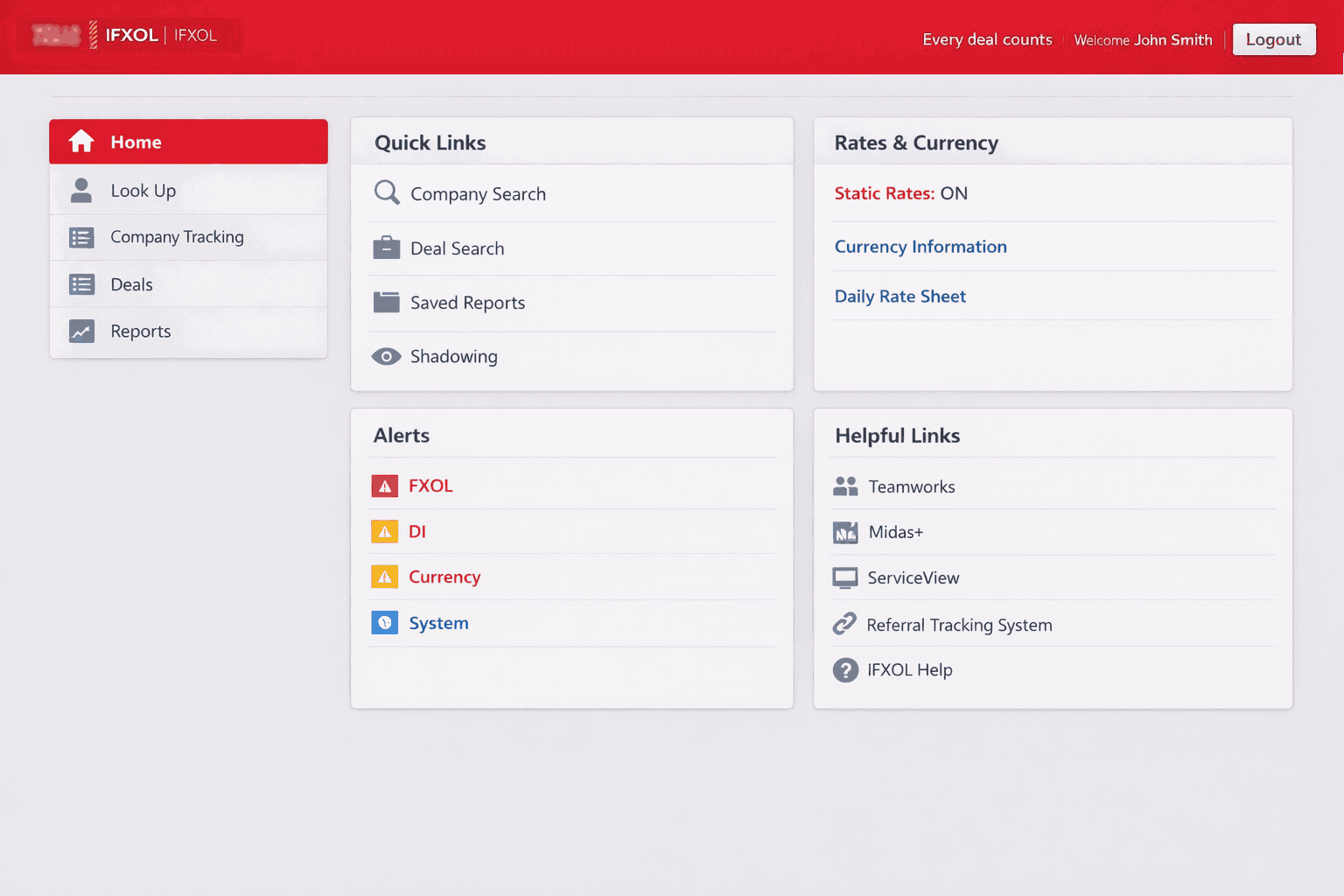
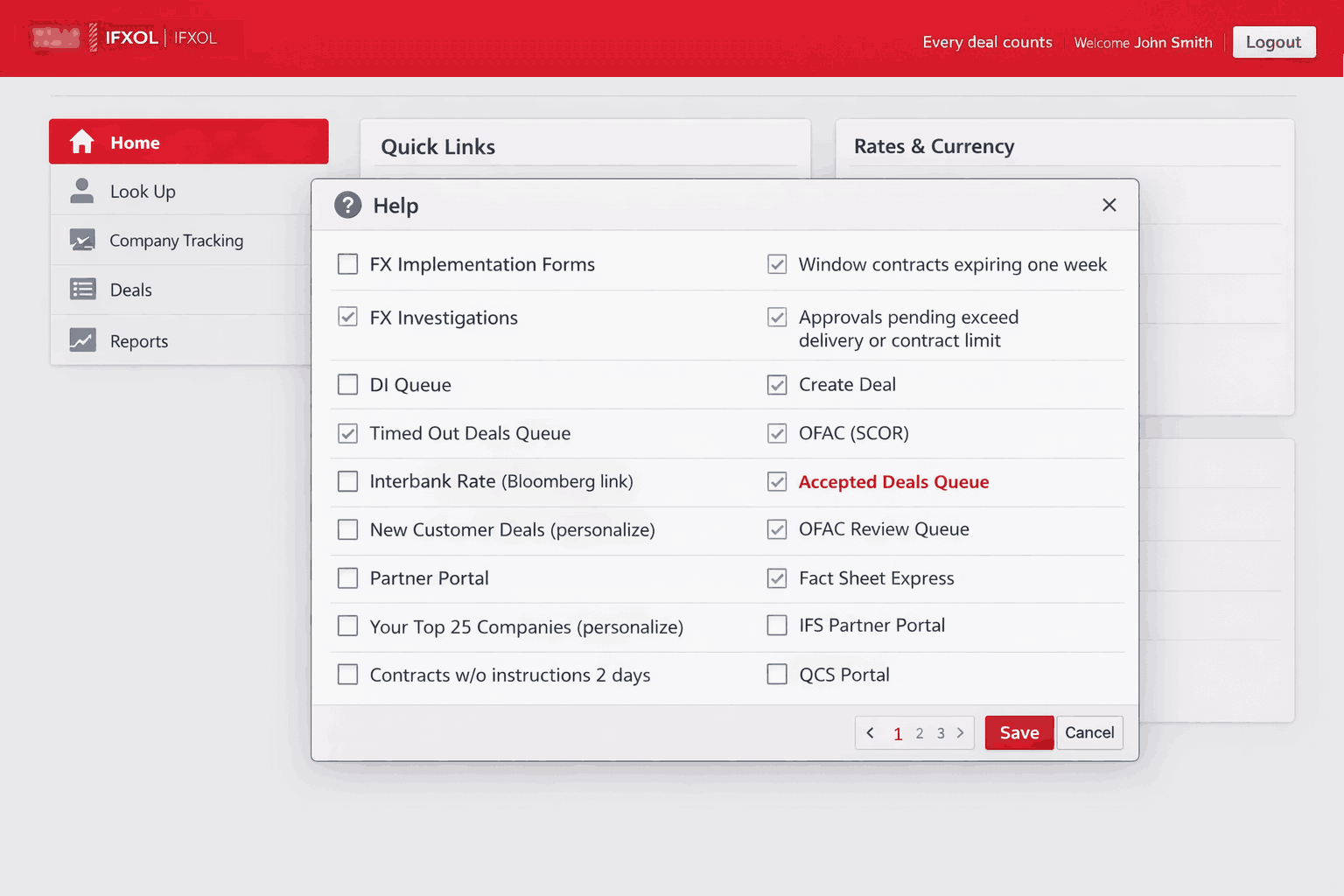
A customizable dashboard was introduced as a centralized entry point. Users could add or remove quick links, access rates and currency information upfront, and hide navigation panels to maximize working area.
UX Process
The engagement followed a structured usability-driven approach, aligned with a 4D (Discover–Define–Design–Deliver) methodology. UX work progressed in parallel with business and functional definition.

- Workflow analysis and task decomposition
- Information architecture rationalization
- Wireframing and interaction modeling
- Visual design aligned with Wells Fargo brand standards
- Iterative validation with stakeholders
FORM & WORKFLOW OPTIMIZATION
- Smart defaults and inline validation
- Consistent labeling and alignment
- Logical grouping of related fields
- Clear separation of primary and secondary actions
WIREFRAMING
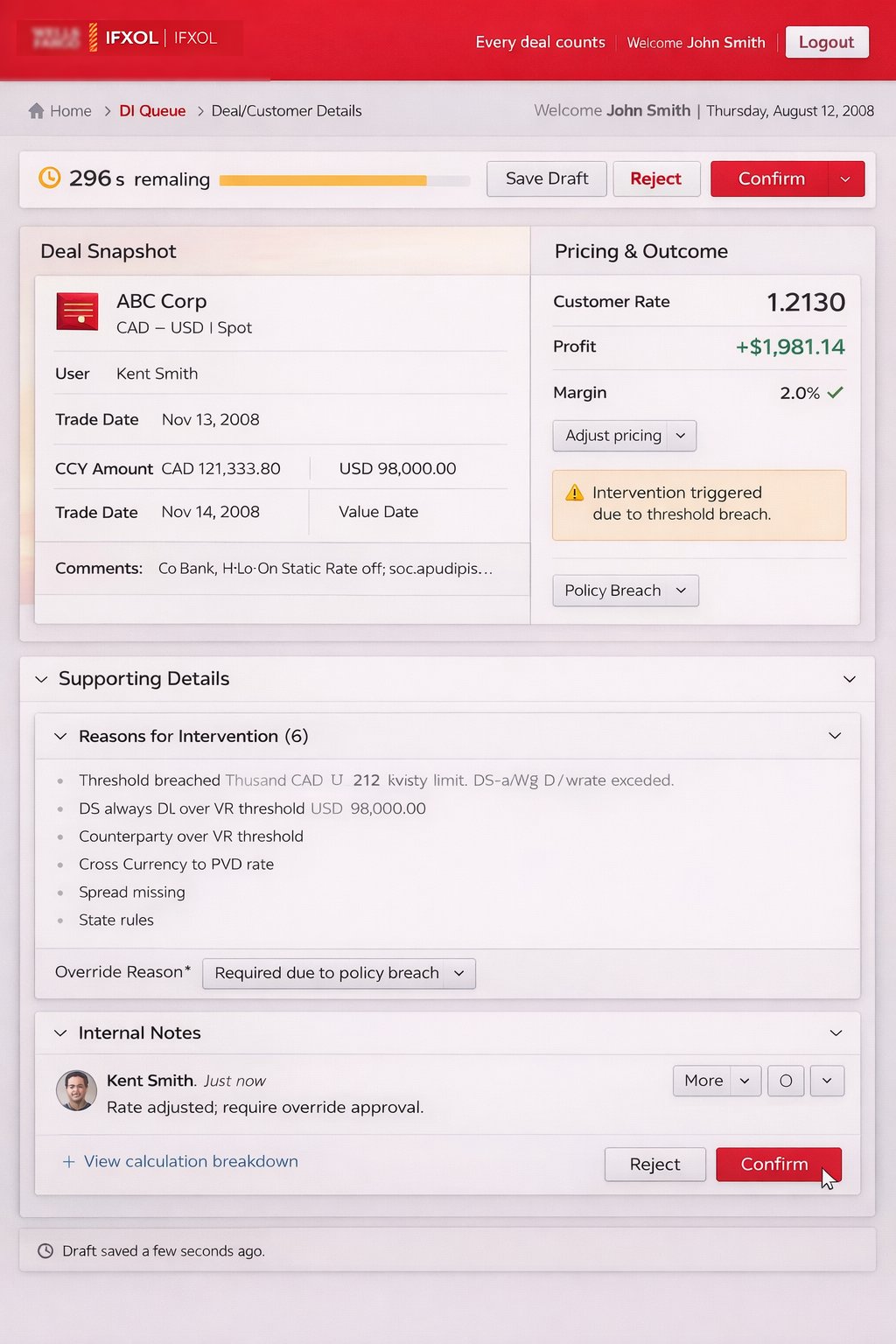
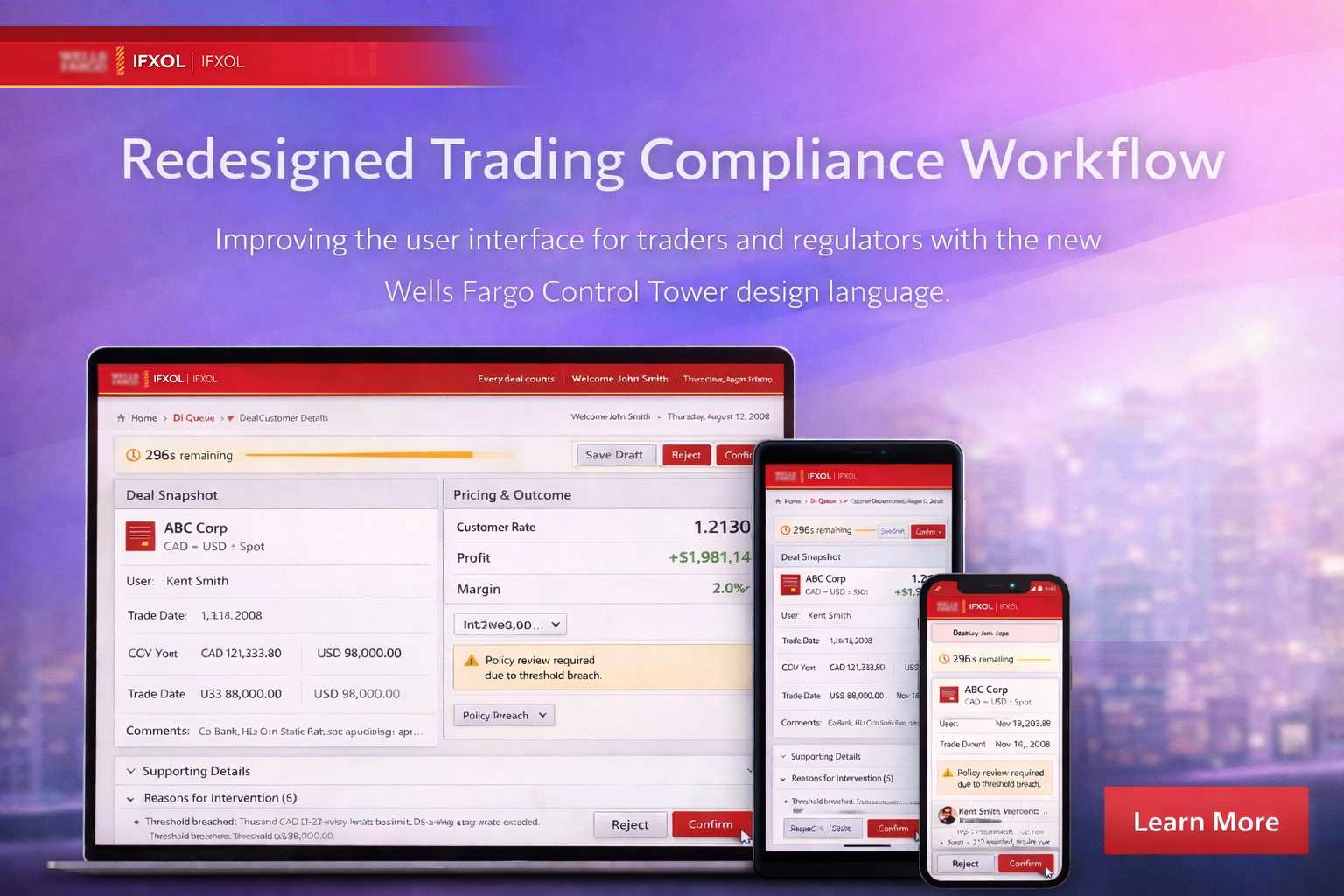
The wireframes for the iFXOL Wells Fargo application were designed to clearly articulate complex FX trading workflows across desktop, tablet, and mobile form factors. Using low-fidelity, grayscale layouts, the focus was on information hierarchy, decision-critical data, and responsive behavior rather than visual styling. Core elements such as deal details, calculations, risk indicators, and CTAs were structured on a consistent grid to ensure clarity, speed of comprehension, and usability in time-sensitive trading scenarios. The wireframes emphasize progressive disclosure, adaptive layouts, and minimal interactions to support accuracy and efficiency in a regulated enterprise environment.

Front-End Engineering
- XHTML, JavaScript, XML-based UI implementation
- Reusable UI components and modular layouts
- AJAX-driven interactions for performance
- Optimized code integrated with backend frameworks
Key Challenges
- UX redesign initiated while requirements were still evolving
- Balancing enterprise branding with usability improvements
- Ensuring consistency across a large, multi-module application
- Designing for expert users without overwhelming new users
Outcomes & Impact
The redesigned FXOL / iFXOL platform significantly improved usability, reduced cognitive load, and established a consistent interaction framework across modules.
- Improved task completion efficiency for frequent FX users
- Reduced learning curve through standardized UI patterns
- Reusable UX foundation for future enhancements
- Strengthened MphasiS positioning as a strategic UX partner