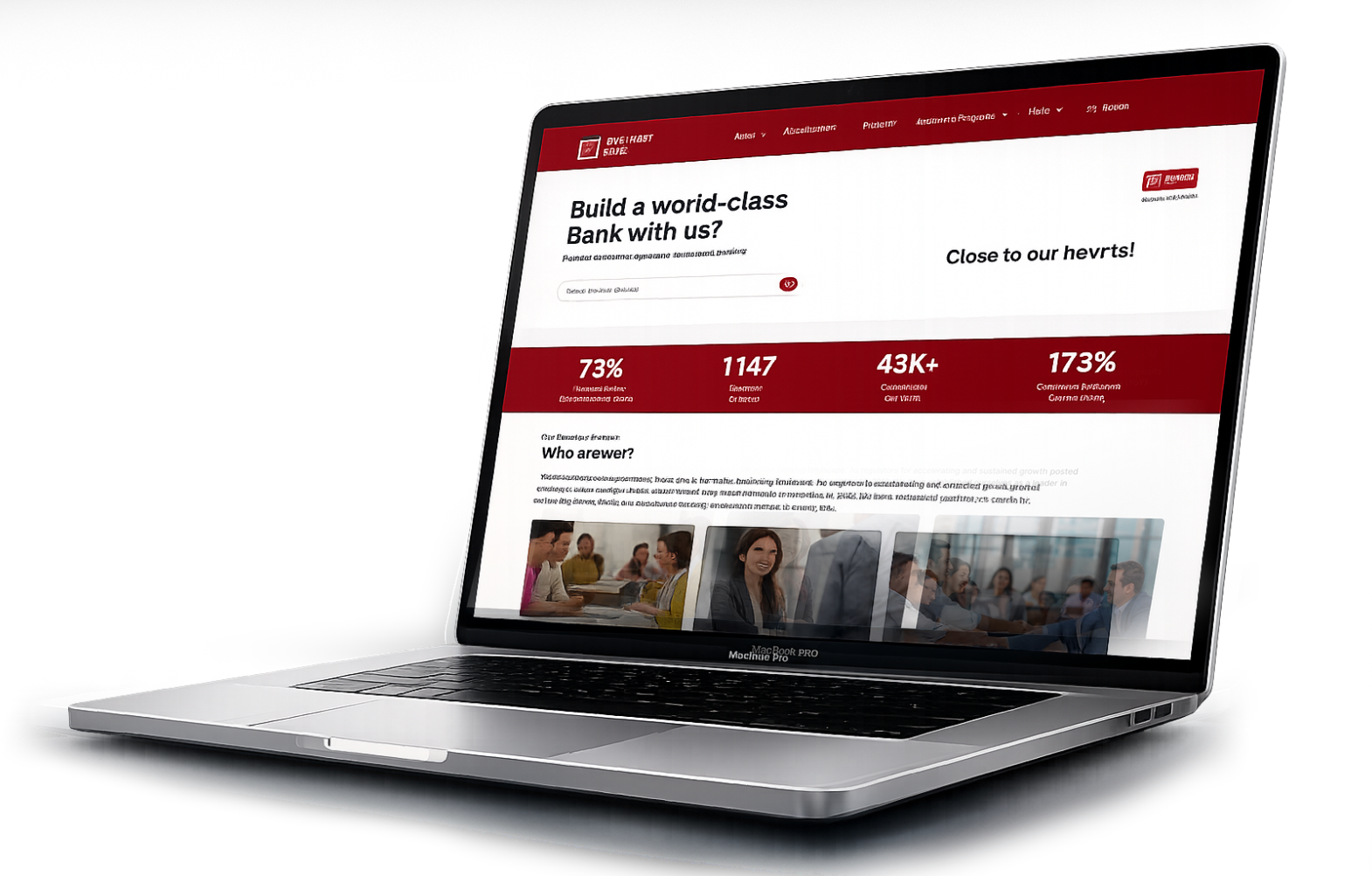
A high-scale, trust-led hiring experience designed and governed on a vendor-led platform for IDFC FIRST Bank — balancing employer branding with accessibility, compliance, and rapid hiring demands. As VP of UX, I held end-to-end accountability for the experience vision, governance model, and delivery outcomes — acting as the final authority on every experience decision.

A vendor-led platform shouldn't mean governance-free delivery.
IDFC FIRST Bank needed a career site that scaled across hiring programs — built on a vendor platform — without sacrificing brand, compliance, or candidate experience quality.

Research began with deep immersion into candidate behaviour, employer-brand perception, platform constraints, and competitive benchmarking across banking and fintech career sites.
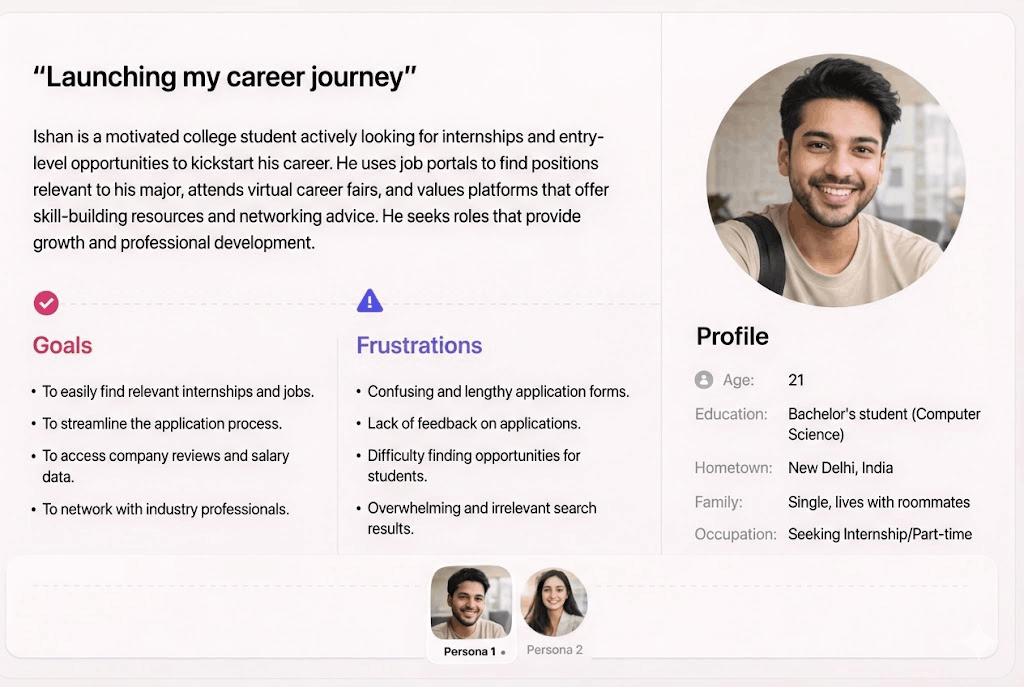
Candidates evaluate an employer's brand, culture, and intent — not just the job listing. Research revealed three clusters of job-seeker behaviour: active candidates comparing IDFC FIRST Bank against peers on role clarity and growth signals; passive candidates making initial brand impressions from the homepage and content; and referrals already sold on the brand but needing frictionless apply flows to convert.
Platform research ran in parallel — mapping Phenom's architectural constraints, component flexibility, and governance hooks — distinguishing where UX could lead, where it needed to negotiate, and where it had to design within fixed rails.
"I need to understand what growth looks like here — before I apply."
"The apply button was easy to find but the form felt like it went on forever."
"I submitted but never heard anything. I assumed something went wrong."

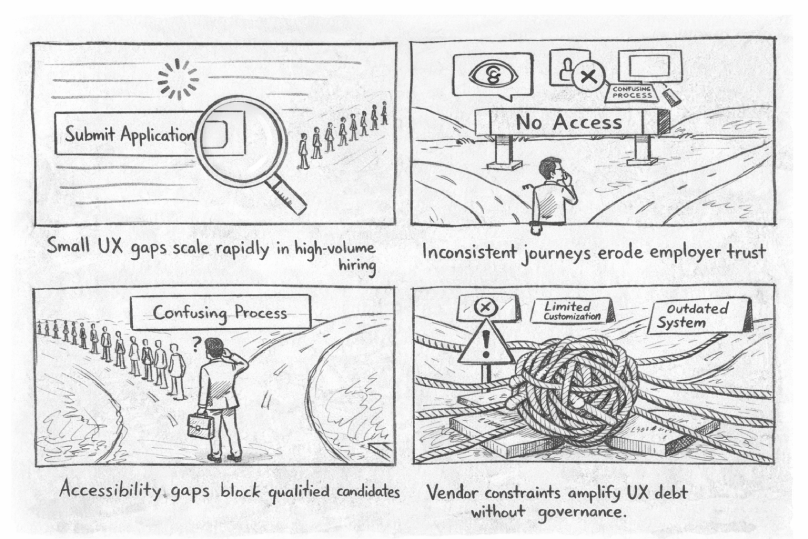
A vendor platform without UX governance is a brand risk at scale.
UX intent diverges during vendor implementation when the only ownership is downstream review.
Brand, compliance, and velocity appear to compete — revealing weak or absent governance structures.
Candidate trust erodes at every friction point in the apply journey — drop-off is a governance failure, not a design detail.
Post-application silence turns a completed hire into a negative brand moment — confirmation is strategy, not an afterthought.
I held end-to-end accountability for the experience vision, governance model, vendor oversight, and delivery outcomes — acting as the final authority on every UX decision across the program lifecycle.
My mandate was to shift UX from a review function to a governing force — not by controlling every pixel, but by authoring the standards, intake gates, and sign-off protocols that governed what vendors built and what teams shipped. Final authority sat with UX; daily execution sat with the partners closest to the platform.


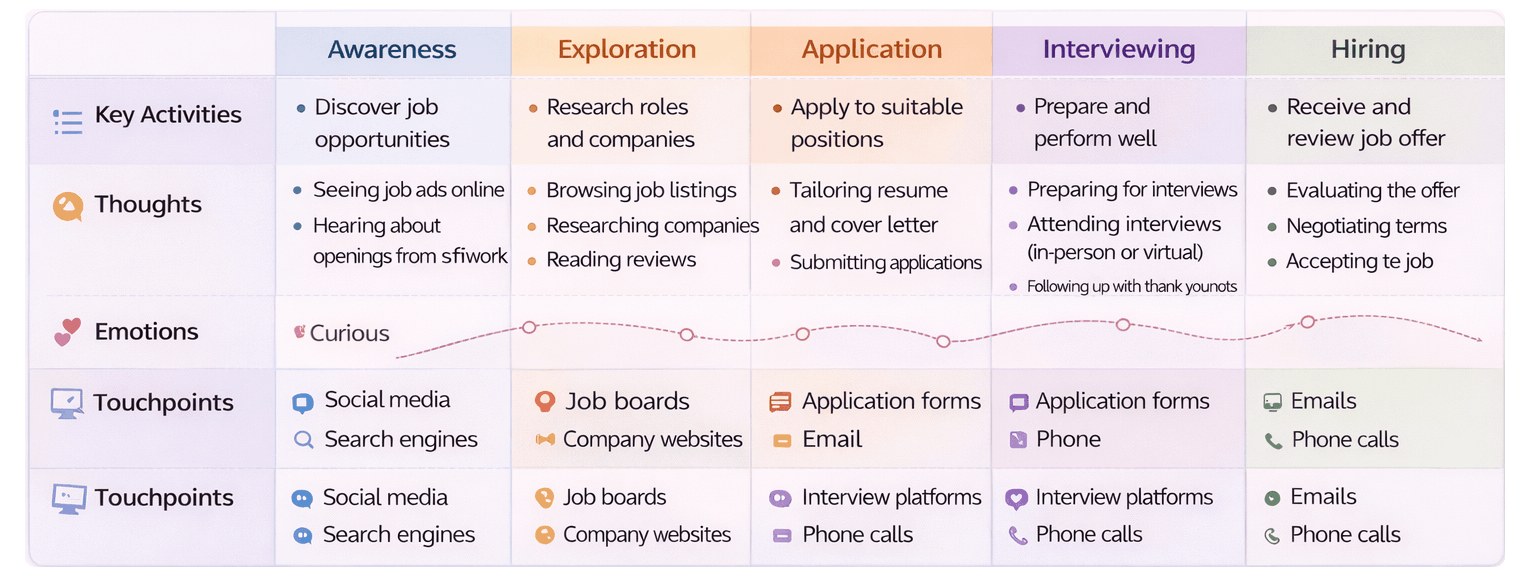
I owned the journey map as a working artifact — co-created with Talent Acquisition, Brand, and the vendor delivery team. Every wireframe traced back to a moment on this journey.
Every screen, template, and confirmation message was anchored to a mapped moment. Every sign-off verified that the moment had been designed for, not assumed. The journey map was the canonical reference through every design and vendor review.

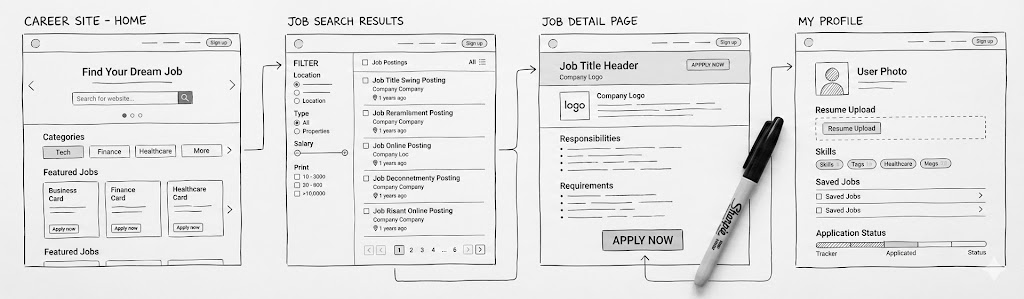
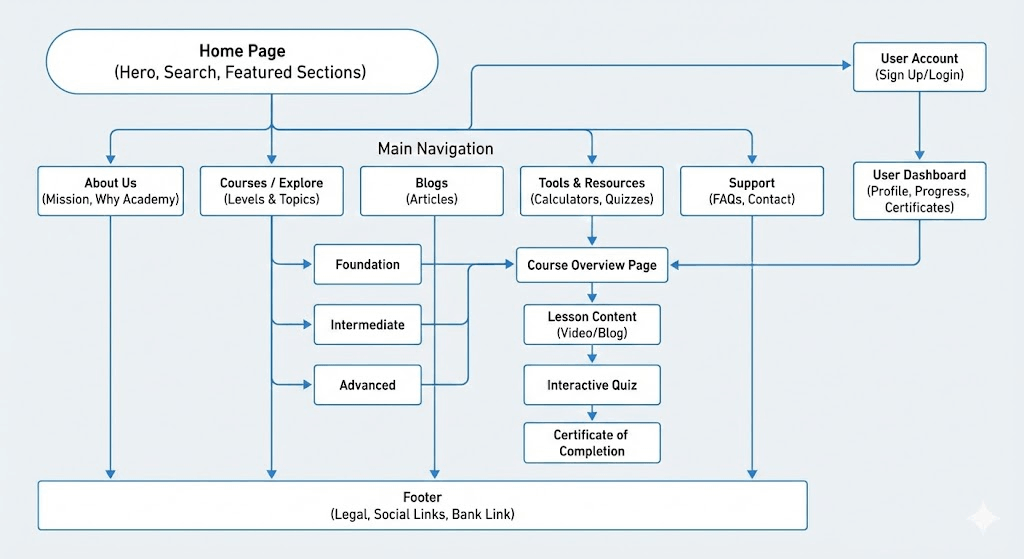
Storyboards isolated highest-impact candidate moments for stakeholder alignment. The app map translated those moments into an IA balancing simplicity, scalability, and usability.
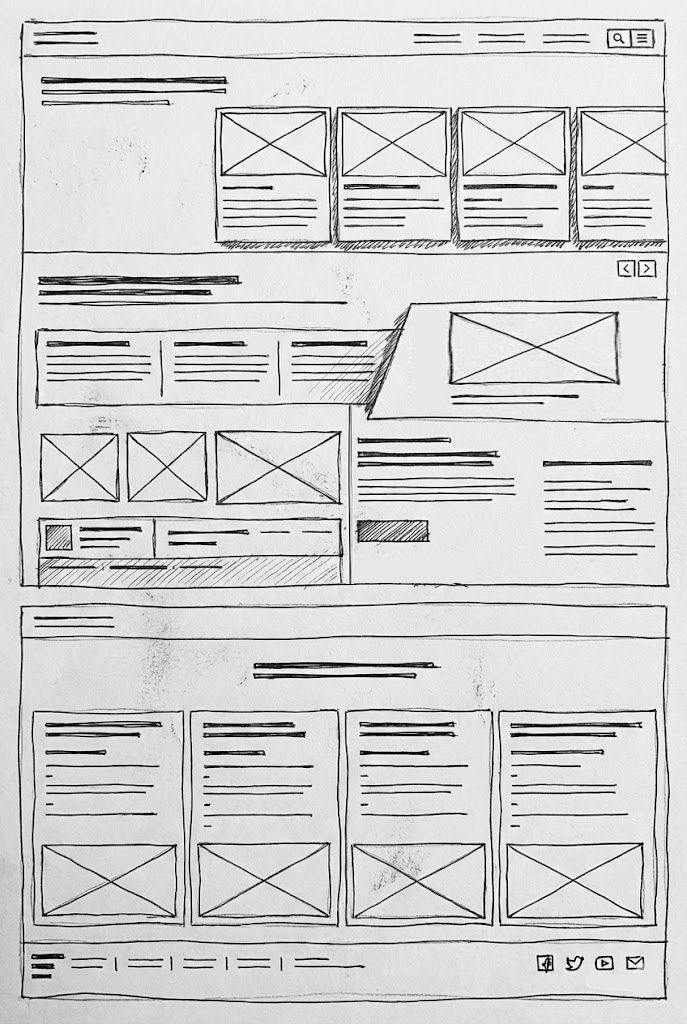
Every wireframe was traceable to a journey moment, and every IA decision was signed off before vendor execution. Storyboards were leveraged to align business, brand, talent acquisition, compliance, and vendor teams on what each moment had to feel like — before any pixels were committed.
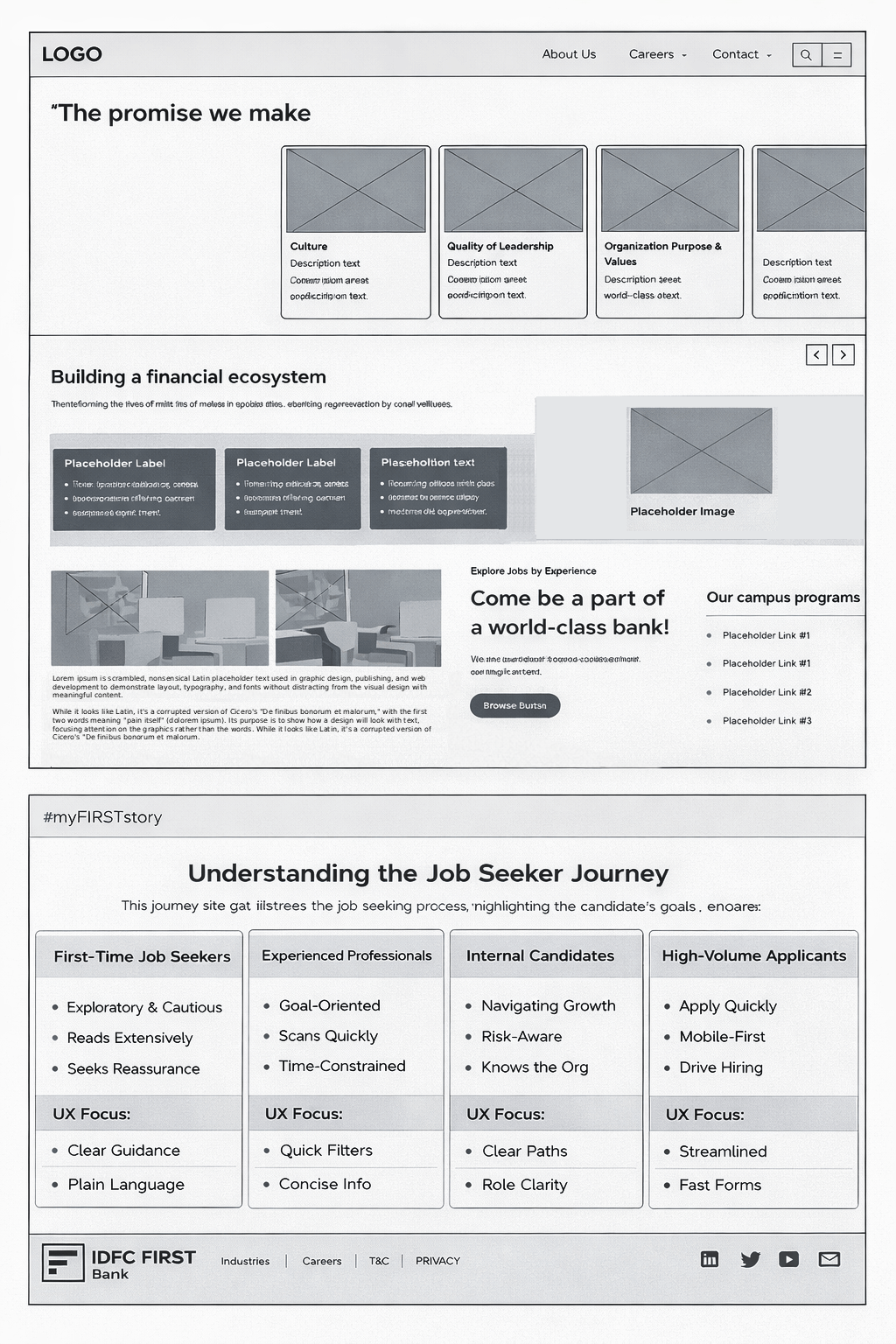
Job listing / Role detail / Apply flow — three load-bearing surfaces of the candidate experience


A design system that mapped to Phenom's component architecture — token-based, reusable across programs, and defensible against vendor drift without blocking delivery velocity.

Centralized standards. Domain autonomy.
A centralized UX Governance Model ensured quality, consistency, and compliance across the hiring platform without slowing delivery — balancing enterprise accountability with team autonomy.
Core UX standards and risk controls were centrally maintained, while implementation remained flexible at the domain level. Governance was lightweight and embedded into delivery workflows, focusing on systemic risks — accessibility, regulatory compliance, brand integrity, apply-flow friction — rather than surface-level design. Continuous improvement was driven through analytics and shared learnings.
Unmoderated usability research validated real-world behaviours against the defined job-seeker persona — generating 30+ insights synthesized into 4 themes that directly informed pre-launch refinements.
Role pages restructured so candidates established relevance within seconds. Headline, signal-bearing tags, and growth indicators surfaced before scroll.
Filters and sorting logic refined to align with the criteria candidates actually used — not the criteria the platform exposed by default.
Content hierarchy and CTAs improved so candidates entered the apply flow knowing what to expect. Confirmation messaging validated to reassure on submit.
Insights translated into refinements before launch — reducing rework during vendor implementation and surfacing systemic issues that would have appeared only post-release.
Final designs reviewed and approved against defined UX guardrails — ensuring consistency across vendor execution, regulatory compliance, and brand expression.
A vendor-led platform implementation became a governed hiring product — design moved from review-after-the-fact to guardrails-built-in.
The career site shifted from a vendor implementation to a long-term product system. Brand, compliance, accessibility, and platform constraints shared one governance layer. New hiring programs and campaigns were absorbed without renegotiating the foundations. UX held the pen on the principles that kept the experience coherent at scale.
The career site was as much a governance shift as a product launch. These are the lessons I'd carry into any future vendor-led, brand-and-compliance-bound UX engagement.
UX intent diverges during vendor implementation when the only ownership is downstream review. Holding the pen on standards, intake, and sign-off — not on every screen — is what kept the experience coherent without slowing delivery. Final authority sits with UX; daily execution sits with the partners closest to the platform.
Whenever brand integrity, regulatory compliance, and hiring velocity appeared to trade against each other, the real issue was a missing guardrail. With the right standards authored upfront, all three became inputs the platform respected — not obstacles teams had to negotiate around mid-flight.
Every interaction during the application journey is a brand event. Clarity of roles, navigation efficiency, mobile-first apply flows, and confirmation messaging all read as signals about how the organization treats people. Designing them as such shifted the platform from a hiring funnel to an employer-brand surface.
Reviews catch problems; guardrails prevent them. Embedding UX, accessibility, brand, and compliance standards directly into vendor delivery workflows reduced rework, improved iteration speed, and made every shipped experience defensible by default. The hiring platform became a long-term product system because governance ran inside the work, not on top of it.