Lead Product Designer · AI/ML · Telecom · EDIPT

Conversation high-stakes networks.


DNA BOT is an AI-powered conversational platform supporting network engineers, operations teams, and service-compliance stakeholders in executing complex, high-risk telecom and digital network tasks. The platform enables natural, intent-driven conversations with circuits, inventory, orders, tickets, and regulatory workflows — removing the need for command memorization or constant system switching.

🤖
Intent-driven
Natural conversation
🛡
Auditable
Compliance-aware
🧠
Adaptive
To user confidence
🤝
Trusted
Operational assistant
Personas
Trusted by Leading Brands
TelecomNetwork engineeringNOCService complianceAI/MLEnterprise
Scroll
01 — Context

Network assistance must be explainable to be trusted.

01 — Project overview

From commands
to conversation.

Network and telecom teams operate in regulated, high-stakes environments where accuracy, speed, and auditability are critical — but existing tools were built on legacy, command-heavy interaction models that created significant friction.

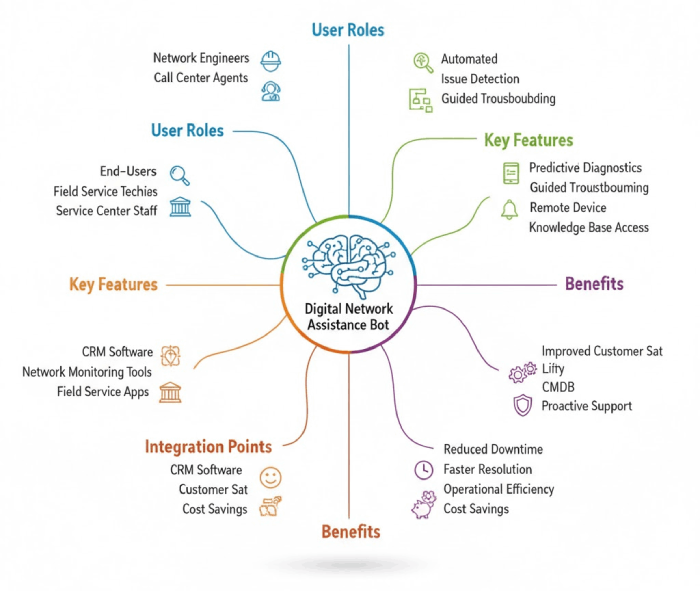
Domain mindmap
Domain mindmap
01 — Context

Legacy, command-heavy tools

Fragmented workflows across circuits, inventory, locations, orders, and tickets. Dense tables and manual query construction created high cognitive load.
02 — Constraints

Regulated and high-stakes

Accuracy and auditability are non-negotiable. Opaque system behavior eroded trust and created compliance concerns.
03 — Opportunity

AI assistance with explainability

The opportunity was an enterprise-grade operational assistant — explainable, scalable, and operationally trustworthy — built on conversational UX foundations.
Business objectives

What the organization needed to achieve

  • Reduce operational friction in regulated telecom workflows
  • Lower training dependency and reliance on tribal knowledge
  • Strengthen compliance through transparent, auditable interactions
  • Scale AI assistance across multiple operational domains
  • Establish executive UX ownership across AI/ML product decisions
UX & design goals

What the experience needed to do

  • Translate intent into action through natural conversation
  • Reduce cognitive load from dense tables and manual queries
  • Adapt tone and depth to user confidence and intent
  • Embed explainability into every system action
  • Treat error recovery and human handoff as first-class experiences
02 — Research & discovery

Three confidence
profiles.

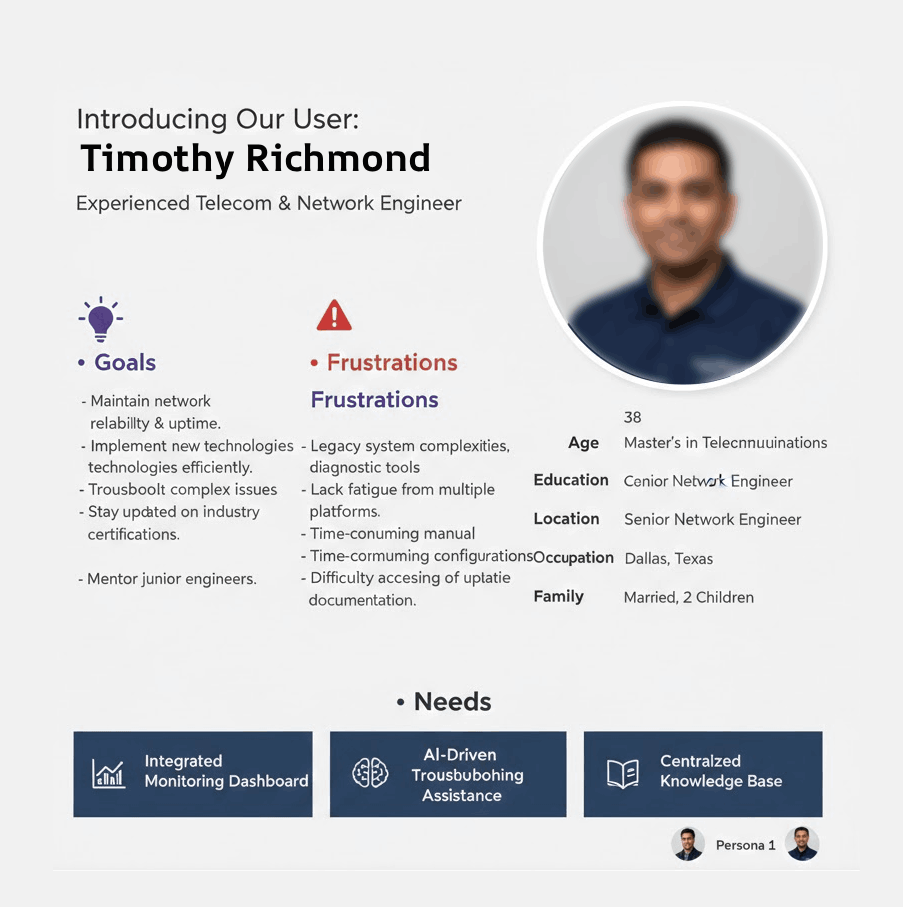
Persona research grounded in behavioral needs — not demographics — captured goals, knowledge levels, pain points, and support expectations across exploratory, goal-oriented, and high-volume users.

Field engineer persona

The assistant was designed to adapt its tone, depth, and interaction model based on user intent — offering reassurance for exploratory users, efficiency for experienced professionals, and speed for high-volume users. Personas actively informed flow design, content hierarchy, help patterns, and error handling.

Stakeholder interviews aligned on constraints and success metrics. Journey walkthroughs identified friction. Review of support data and analytics validated patterns at scale.

"If the bot can't tell me what it just did, I don't trust it with my next action."

Network engineer · Audit-led

"I don't need a chat — I need to skip three steps and get to the result."

Experienced professional · Goal-oriented

"I'm on mobile, I have a ticket open, I need an answer in two taps."

Field tech · High-volume
User personas

Three behavioral profiles.

E
Exploratory & cautious
Reassurance-led · Detail-driven
Explores options before taking action and consumes detailed information. Needs clear, step-by-step guidance with contextual prompts and confirmations.
Step-by-stepPlain languageReassurance
G
Experienced & goal-oriented
Time-constrained · Outcome-led
Scans content quickly and operates under time constraints. Needs quick filters, shortcuts, and concise actionable responses.
ShortcutsConciseAction-led
H
High-volume / transactional
Speed-led · Mobile-first
Prioritizes speed over exploration with repetitive, high-frequency actions. Needs streamlined conversational flows and optimized forms with smart defaults.
StreamlinedMobileSmart defaults
03 — Core problem

Opaque AI in regulated networks is operational risk.

01

Fragmented workflows across circuits, inventory, orders, tickets, and locations.

02

High cognitive load from dense tables and manual query construction.

03

Frequent context switching across multiple enterprise systems.

04

No intelligent guidance for next steps; opaque system behavior eroded trust.

04 — My role & execution

EDIPT in practice.
End-to-end AI UX.

I drove the project end to end with hands-on ownership of product design — using EDIPT to design, prototype, and validate conversational flows, interaction patterns, and reusable UI systems.

I worked closely with product, engineering, and AI teams to ensure the solution was scalable, explainable, and operationally trustworthy — translating complex workflows, platform constraints, and compliance requirements into clear, usable conversational patterns grounded in real operational needs.

Responsibility 01

Lead AI conversational UX

  • Drove end-to-end AI conversational UX design
  • Defined the operational assistant philosophy
  • Translated AI capability into trustworthy interaction patterns
  • Held design authority across product and AI teams
Responsibility 02

Design hands-on with EDIPT

  • Hands-on design and prototyping using EDIPT
  • Built conversational flows, interaction patterns, and component systems
  • Validated AI behavior under realistic operational scenarios
  • Iterated continuously through usability testing
Responsibility 03

Map workflows for compliance

  • Mapped workflows for network, order, and compliance teams
  • Embedded auditability and traceability into conversations
  • Designed adaptive tone and depth by user intent
  • Surfaced explainability at every consequential moment
Responsibility 04

Cross-functional collaboration

  • Partnered closely with Product, Engineering, and AI stakeholders
  • Established shared vocabulary across UX, AI, and compliance reviews
  • Coached teams on conversational UX trade-offs
  • Ensured governance kept pace with delivery
05 — User journey map

Intent. Clarify.
Execute. Explain.

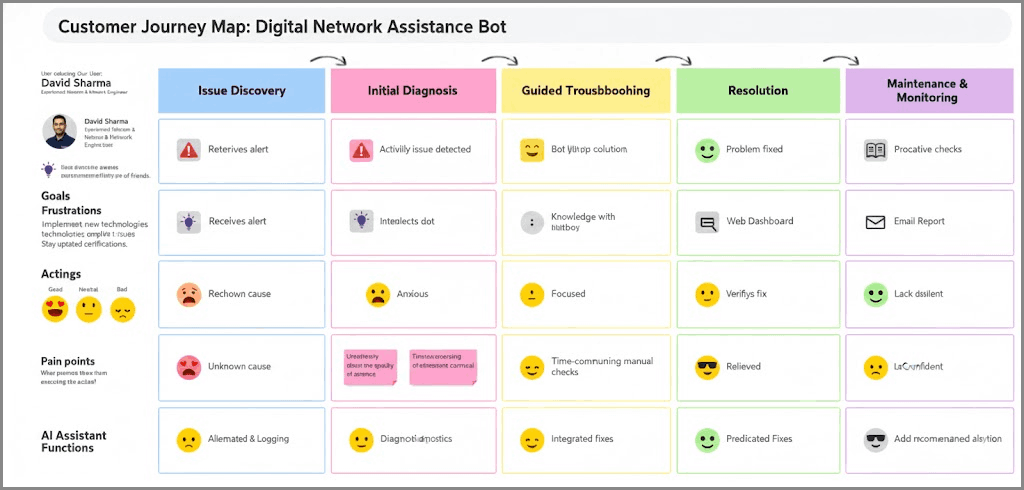
Conversational journeys were mapped turn-by-turn — surfacing where explainability, adaptive tone, and human handoff needed to live so trust held through high-stakes operational moments.

Assistance journey
Assistance journey

Every screen, template, and confirmation message was anchored to a mapped moment. Every sign-off verified that the moment had been designed for, not assumed. The journey map was the canonical reference through every design and vendor review.

Stage 01
Discover
Relevant roles surface fast regardless of audience. Search, filter, and smart sorting reduce time-to-fit.
Stage 02
Evaluate
Growth signals, eligibility, and role fit visible above the fold. Candidates assess before committing to the apply flow.
Stage 03
Apply
Frictionless flow aligned to context and device. Mobile-first, multi-step with clear progress indication.
Stage 04
Post-application
Post-application visibility and communication shape long-term employer perception. Confirmation is strategy, not a detail.
Principle
"Trust in the brand."
Clarity, relevance, and trust drive candidate decisions — at every stage, on every device. The principle anchored every journey decision.
Drag to explore all stages
06 — Storyboarding, app map & wireframing

From paper prototypes
to a conversational system.

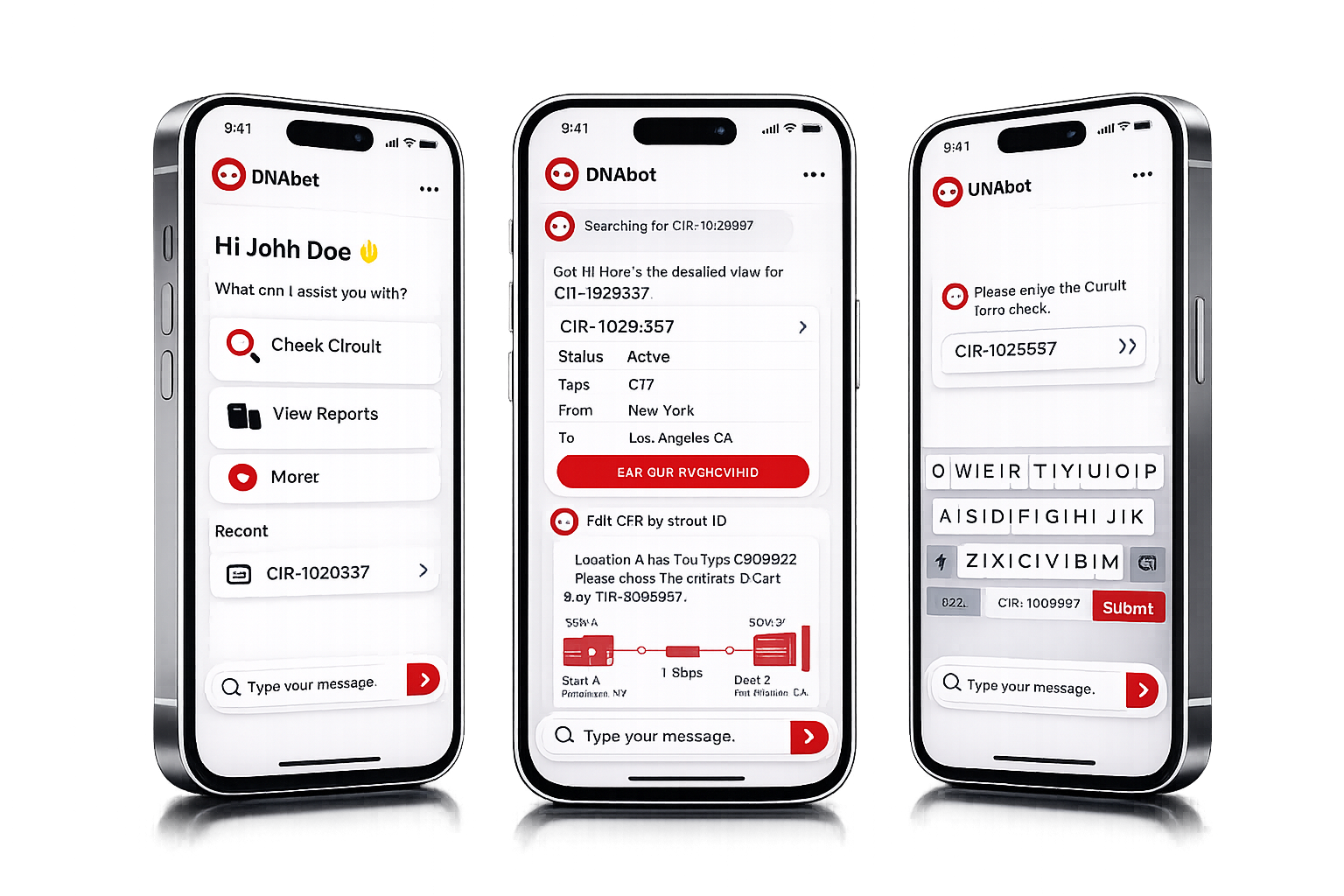
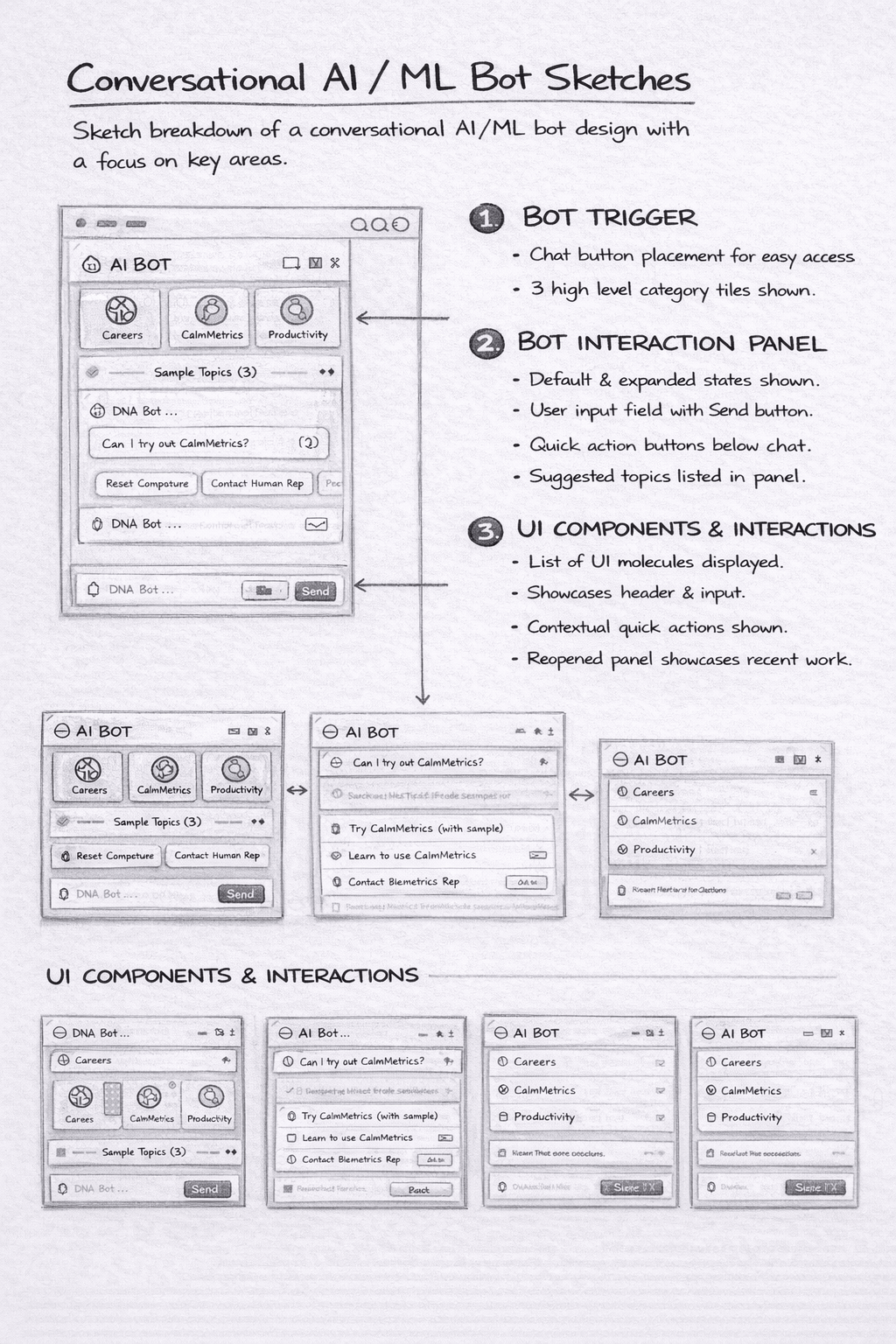
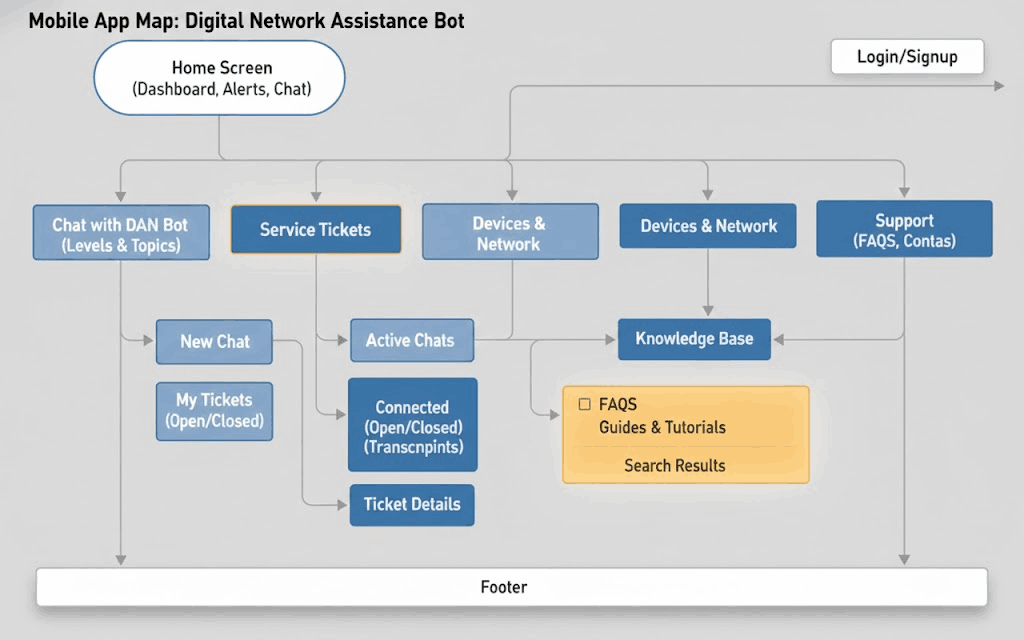
Paper prototyping rapidly tested conversational structures, intent paths, and fallback scenarios — converging on a scalable IA before moving into AI model training and high-fidelity design.

Storyboard & app map

Every wireframe was traceable to a journey moment, and every IA decision was signed off before vendor execution. Storyboards were leveraged to align business, brand, talent acquisition, compliance, and vendor teams on what each moment had to feel like — before any pixels were committed.

Diagnose · Navigate · Act — the DNA assistance loop

Homepage Job Listing Role Detail Apply Flow Confirmation Status Track SEARCH & FILTER GROWTH SIGNALS MOBILE-FIRST TRUST-BUILDING VISIBILITY
07 — Design system & UI

Conversational patterns.
AI-aware UI system.

Reusable conversational patterns, intent flows, and response hierarchies — encoded into a system that scaled across telecom domains while keeping AI behavior consistent and explainable.

App map
App map

Colour · DNA · Field Assist
Field assistance · warm amber
Type · 2 families
Aa Aa
Display / Body pairing
Spacing · 8pt scale
8 / 16 / 24 / 32 / 48
Components · Modular
Reused across hiring journeys & programs
08 — Governance

Govern AI behavior as a product property.

08 — UX governance model

Explainability built
into every action.

Governance defined where the assistant could act vs ask, what behavior had to be explainable, and how human handoff worked — keeping the assistant trustworthy under regulated, high-stakes operation.

Core UX standards and risk controls were centrally maintained, while implementation remained flexible at the domain level. Governance was lightweight and embedded into delivery workflows, focusing on systemic risks — accessibility, regulatory compliance, brand integrity, apply-flow friction — rather than surface-level design. Continuous improvement was driven through analytics and shared learnings.

Pillar 01

Centralized standards

Core UX standards and risk controls maintained centrally — accessibility, brand expression, regulatory compliance. Reviewed and signed off by UX at executive level. The pen on every standard sat with the UX leader, not the vendor.
Pillar 02

Domain autonomy

Implementation flexible at the domain level — vendors and product teams ship within shared guardrails, not on top of them. Faster, safer iteration. The guardrail defines the boundary; what lives inside it belongs to the delivery team.
Pillar 03

Embedded into delivery

Lightweight governance running inside delivery workflows — focused on systemic risks, not surface design. Continuous improvement via analytics and shared learnings enabling the organization to scale while maintaining trust and consistency.
09 — Usability studies

Tested for trust.
Not just intent accuracy.

Unmoderated usability testing with assistance personas — 6 participants, 5 critical tasks — evaluated intent accuracy, response clarity, perceived trust, and flow efficiency. 30+ insights synthesized into 4 themes informed conversational design.

6
Participants matching persona
5
Critical tasks tested
30+
Qualitative insights generated
4
Themes for refinement
Persona needs → design actions
Candidate needQuickly understand if a role is relevant to their skills and experience.
Design actionPersona-based usability testing to validate role clarity; restructured role pages with growth signals above the fold.
Candidate needFind suitable jobs without excessive scrolling or filter friction.
Design actionAnalyzed navigation paths and search behaviour; refined filters and sorting logic to match real candidate criteria.
Candidate needConfidence before starting an application — know what to expect.
Design actionImproved content hierarchy and CTAs; streamlined apply flow to reduce friction at the highest drop-off point.
Candidate needReassurance that submission was received and is being processed.
Design actionValidated confirmation messaging and post-application communication — redesigning as an employer-brand touchpoint, not a utility screen.
Candidate needFast, predictable apply flow on mobile under real conditions.
Design actionAudited and streamlined the apply flow; validated across primary device types matching the persona's usage context.
01

Clarity of roles

Role pages restructured so candidates established relevance within seconds. Headline, signal-bearing tags, and growth indicators surfaced before scroll.

02

Navigation efficiency

Filters and sorting logic refined to align with the criteria candidates actually used — not the criteria the platform exposed by default.

03

Application confidence

Content hierarchy and CTAs improved so candidates entered the apply flow knowing what to expect. Confirmation messaging validated to reassure on submit.

04

Pre-launch readiness

Insights translated into refinements before launch — reducing rework during vendor implementation and surfacing systemic issues that would have appeared only post-release.

10 — Outcomes

Network assistance scaled
as a trusted enterprise system.

Final designs were validated against defined UX and AI governance guardrails — ensuring consistency across conversational behavior, model outputs, regulatory requirements, and brand tone.

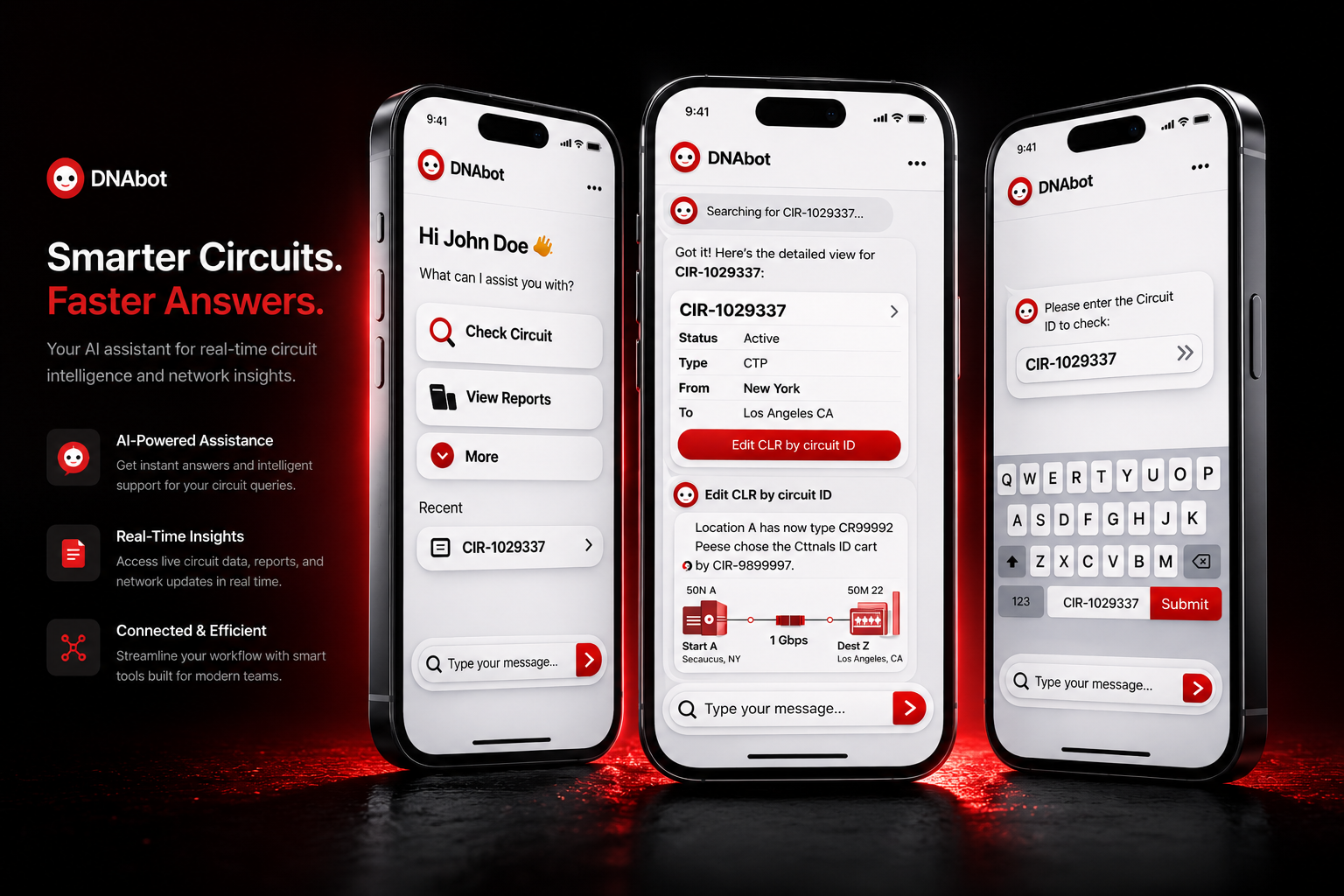
DNA in production
DNA in production

Command-heavy network tools became an AI assistance platform — design moved from manual queries to explainable conversation.

Outcome 01
Cognitive load reduced — natural conversation replaced dense tables and manual queries.
Outcome 02
Context switching minimized — single conversational surface across circuits, orders, tickets.
Outcome 03
Trust strengthened through explainability — every system action accompanied by a 'why'.
Outcome 04
Operational adoption broadened — adaptive tone served exploratory, expert, and high-volume users.
Outcome 05

A network assistance platform governed as long-term intelligent system.

DNA BOT shifted from an experimental AI feature to a governed operational assistant. Intent patterns, response hierarchy, explainability, and human handoff sat inside one governance layer that engineering and AI teams built within. The result was a digital network assistance platform — not a set of isolated conversational flows.

AI conversational UXExplainable AIIntent-drivenAdaptive toneAudit-awareEDIPT-ledCompliance-readyOperational assistant
11 — Reflection

What I'd carry forward.

Designing trustworthy AI for regulated telecom operations is a governance discipline as much as a design one. These are the lessons I'd carry forward.

The hardest part wasn't training the model.

It was governing where AI could act vs where humans must decide.
01

Explainability earns trust faster than accuracy.

Engineers adopted the assistant when it explained why — not when it was technically right. Explainability was the trust unlock, not raw intent accuracy.

02

Adapt to intent and confidence, not demographics.

Personas grounded in behavioral needs (exploratory, goal-oriented, high-volume) drove adaptive tone and depth. The assistant served three working modes from one foundation.

03

Handoff is the trust path, not the failure path.

Designing fallback and human handoff as first-class experiences reinforced trust precisely when failure would have eroded it. The exception path proved the system's integrity.

04

Govern AI behavior as a product property.

Defining where the assistant could act vs ask kept the platform safe at scale. AI governance lived inside delivery — not as a downstream review.