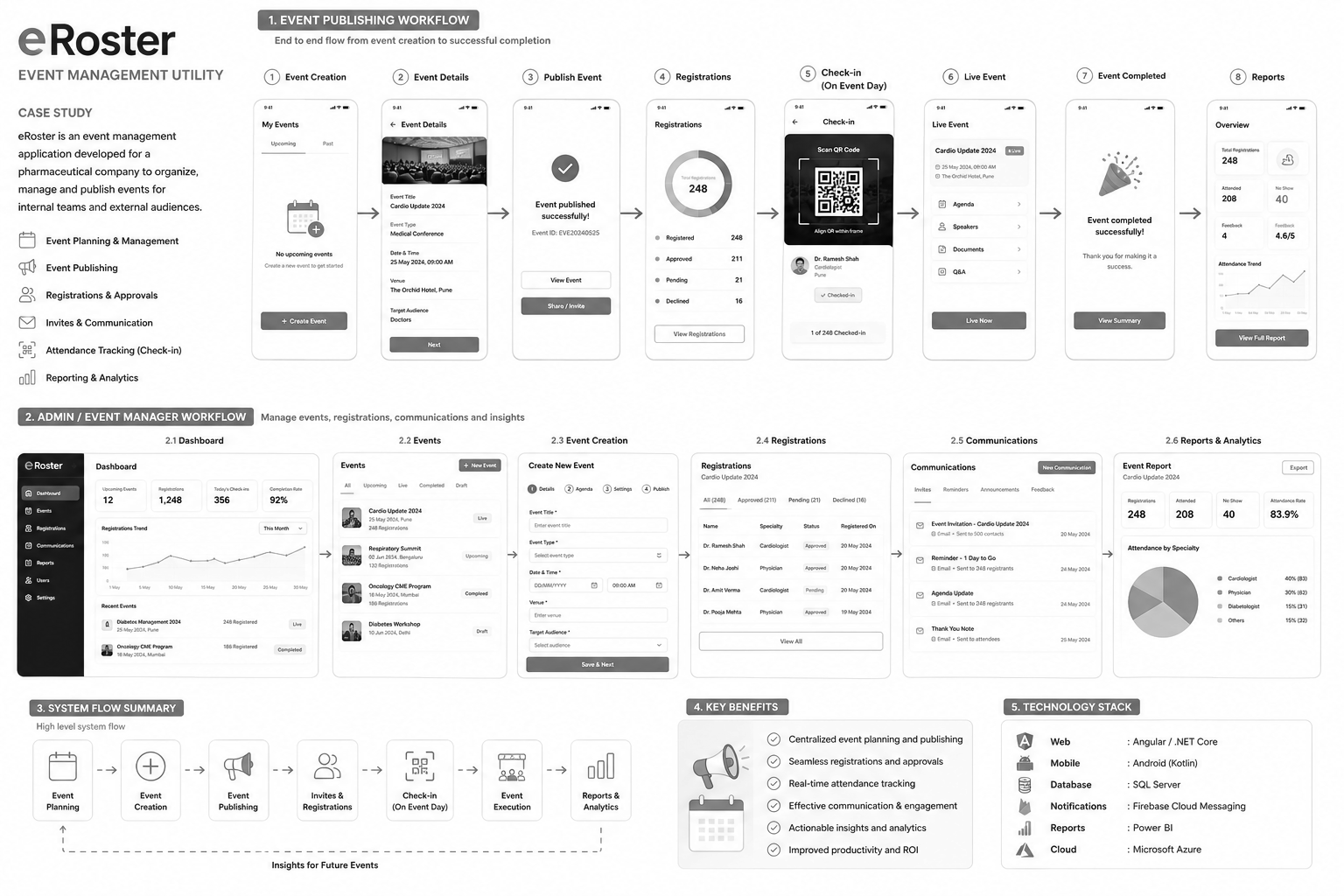
EROSTER is an enterprise-grade event management platform built for pharmaceutical organizations to plan, govern, and audit medical events across regions, teams, and stakeholders. The problem was not the absence of tools — it was the absence of orchestration. Inspired by automation-led enterprise platforms, this work reduced manual effort through structured workflows while maintaining human control, compliance, and accountability.

Automation without human control is compliance debt.
Pharma organizations lacked a unified, professional system to plan and manage medical events across teams, locations, and stakeholders — relying instead on fragmented systems, manual coordination, and human follow-ups.

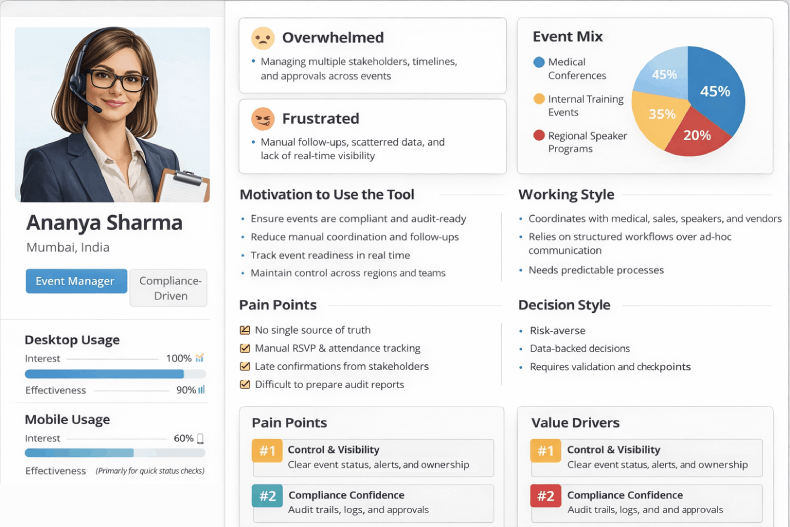
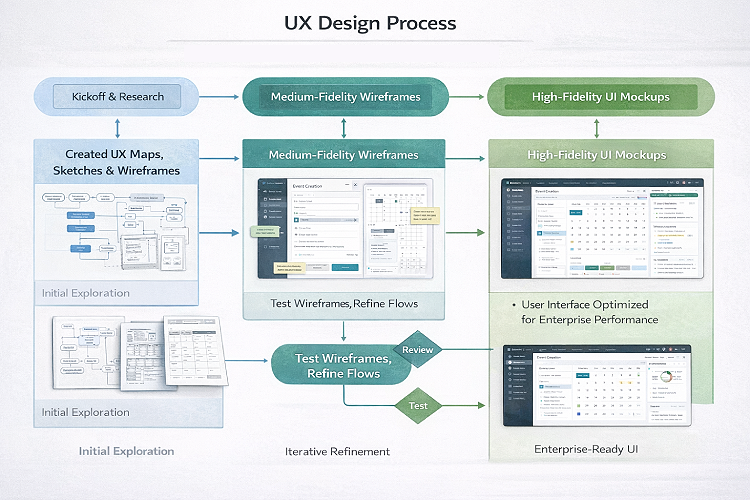
Research-driven design anchored execution — user interviews, journey mapping, and iterative validation shaped workflows centered on the Event Manager role and the realities of running medical events.

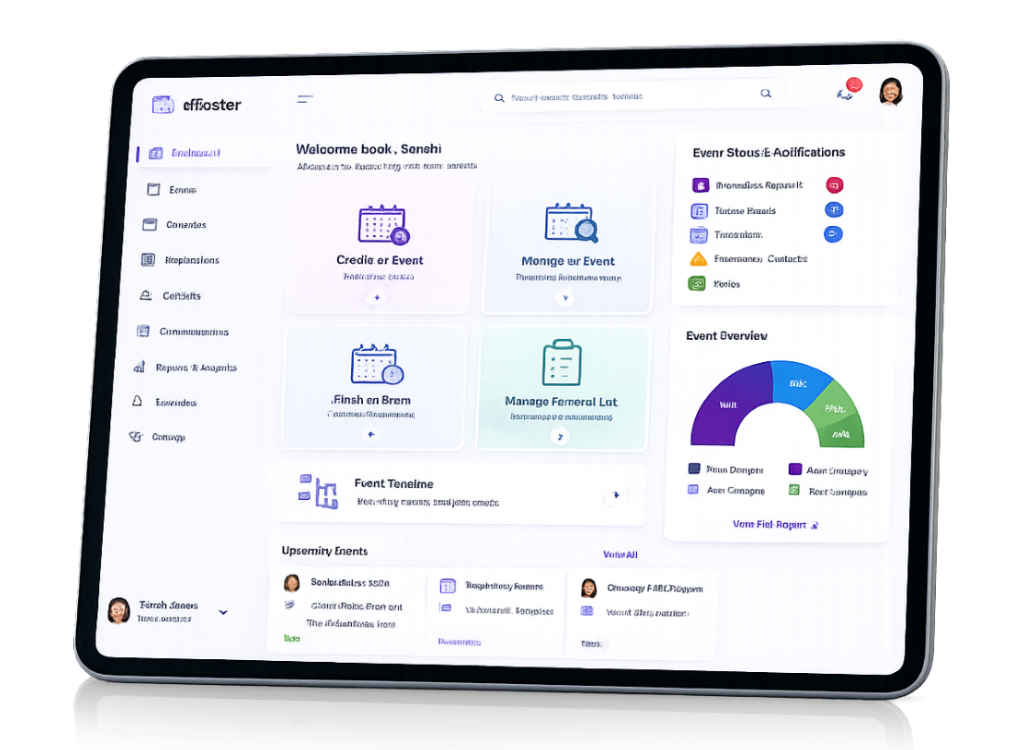
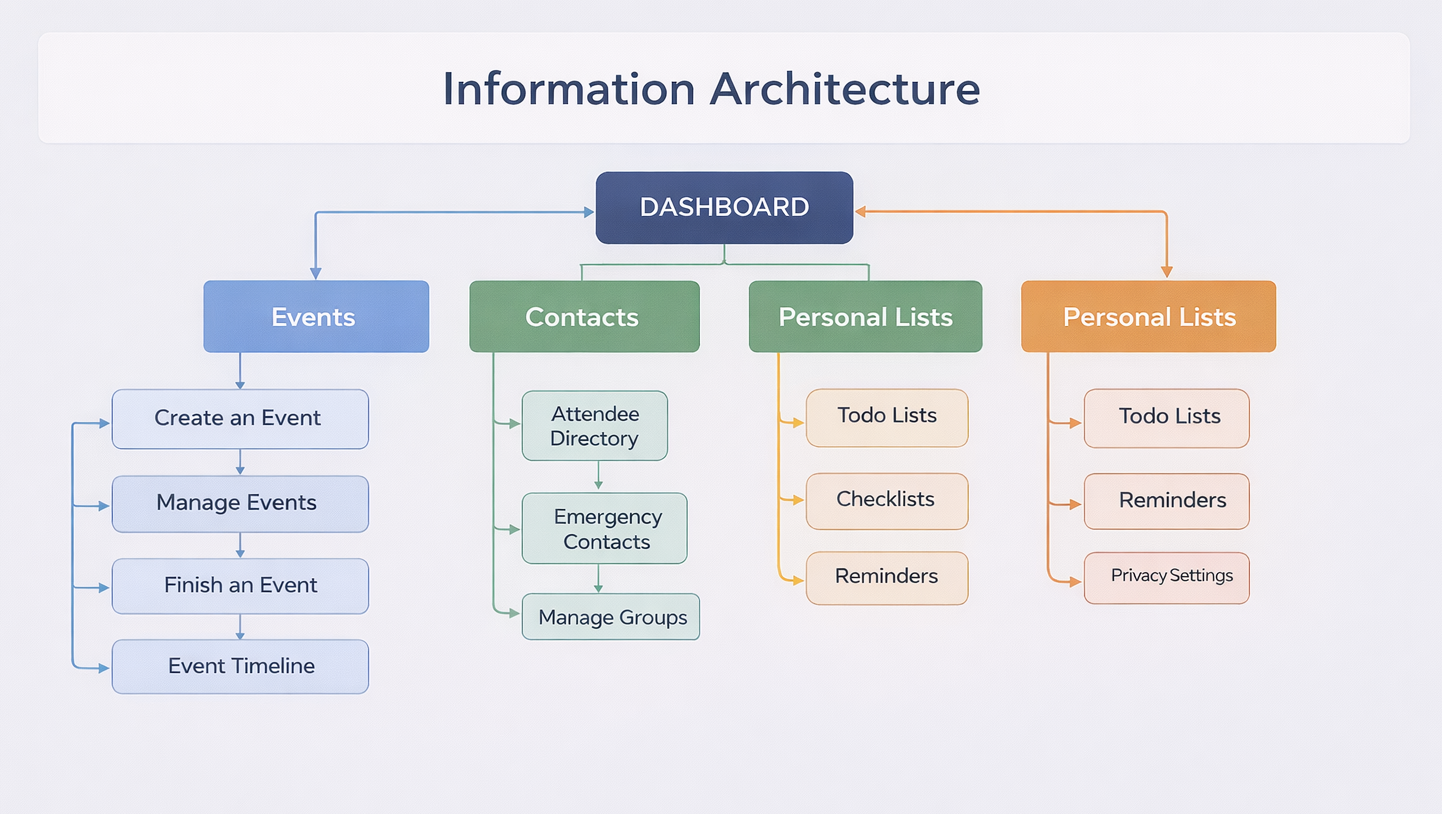
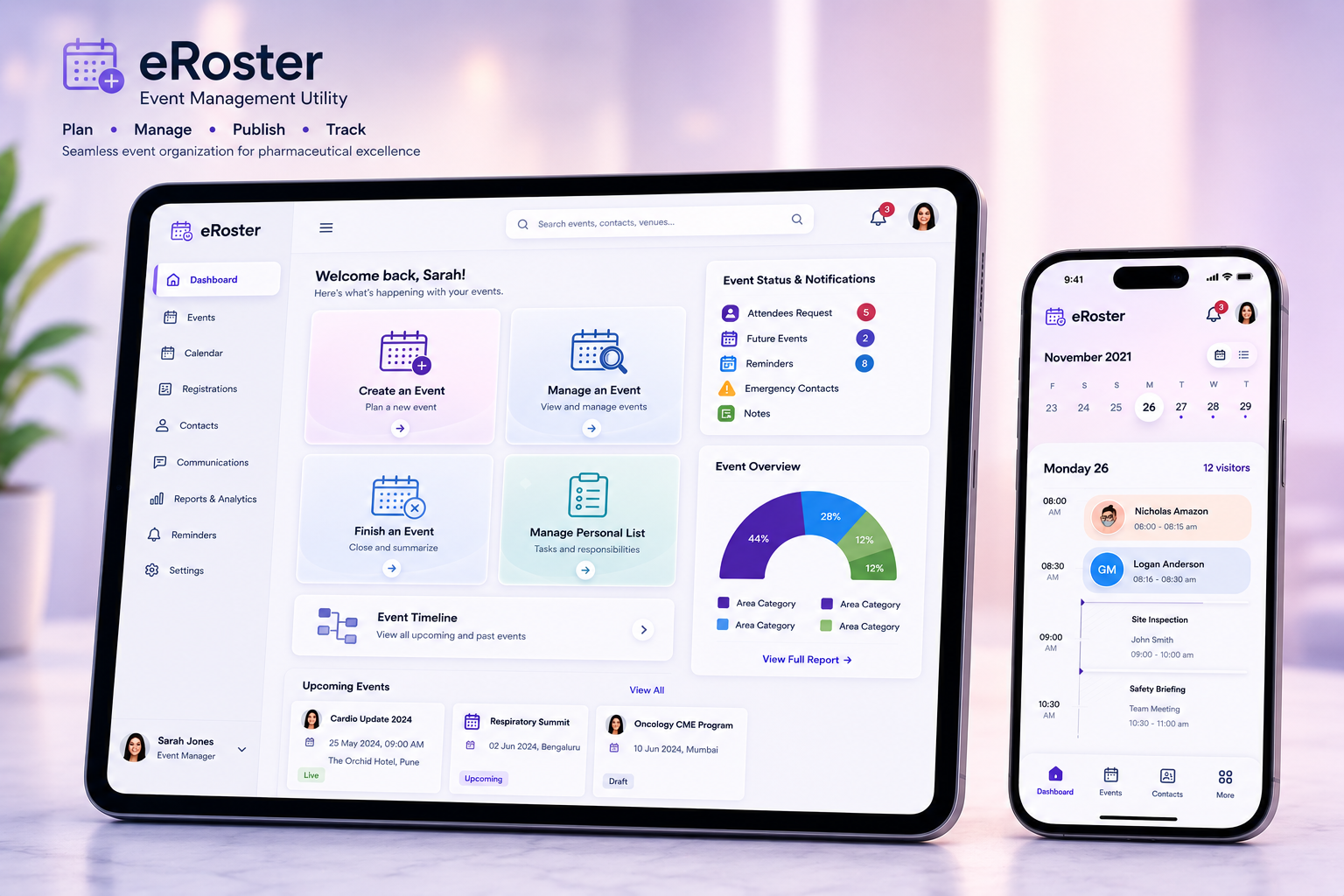
Information architecture was designed to mirror how people actually run medical events — clear, role-driven, and dependable. A central dashboard acts as a single source of truth, giving teams visibility into event status, pending actions, approvals, and critical alerts so nothing relies on memory or follow-ups.
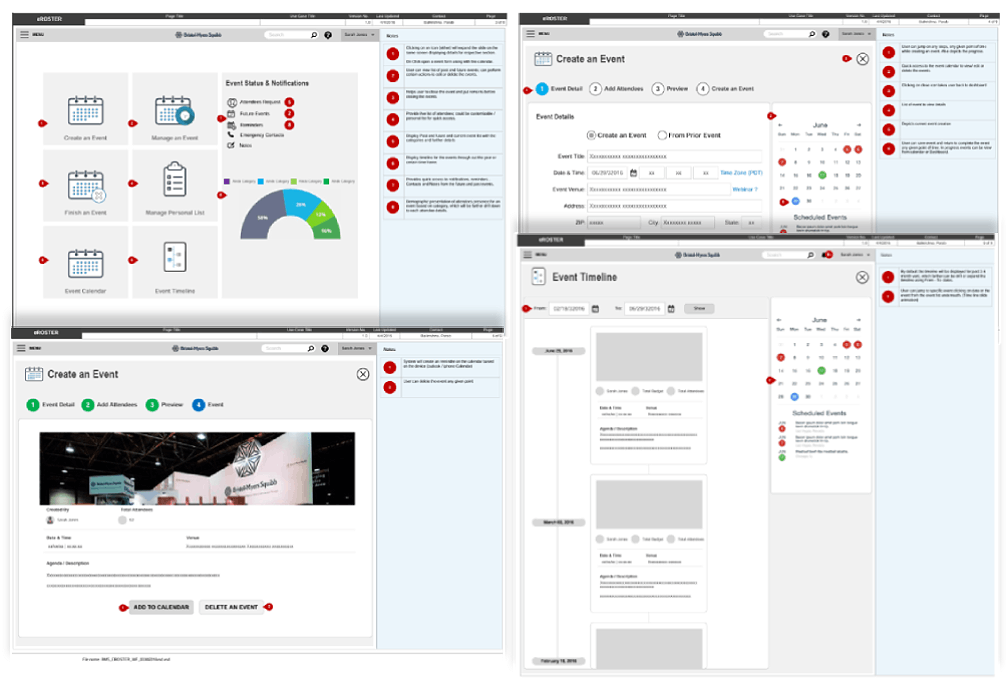
Events are organized around the full lifecycle — creation, execution, closure — with tasks, RSVPs, attendance, and documentation automatically building an audit-ready trail through the event timeline.
"If I miss one approval, the event gets blocked. I need the system to tell me, not my inbox."
"During the event itself, I just need to know who's there and who isn't."
"Audit needs everything traceable. I shouldn't have to assemble that after the fact."
The problem wasn't the absence of tools — it was the absence of orchestration.
Fragmented workflows across planning, registration, communication, and reporting.
Manual coordination between internal teams, hosts, and participants.
Limited visibility into event progress, confirmations, and attendance.
Inconsistent standards for RSVP, access control, and notifications.
I led the platform from concept to implementation — user research, ideation, prototyping, usability testing, high-fidelity UI design, and design standards definition, in close collaboration with product, engineering, and stakeholders.
Inspired by automation-led enterprise platforms, the system reduced manual effort through structured workflows while maintaining human control, compliance, and accountability. Standardized, reusable modules handled core event operations; guided event creation simplified complex workflows; and a consistent UX and visual language carried across web, tablet, and mobile.
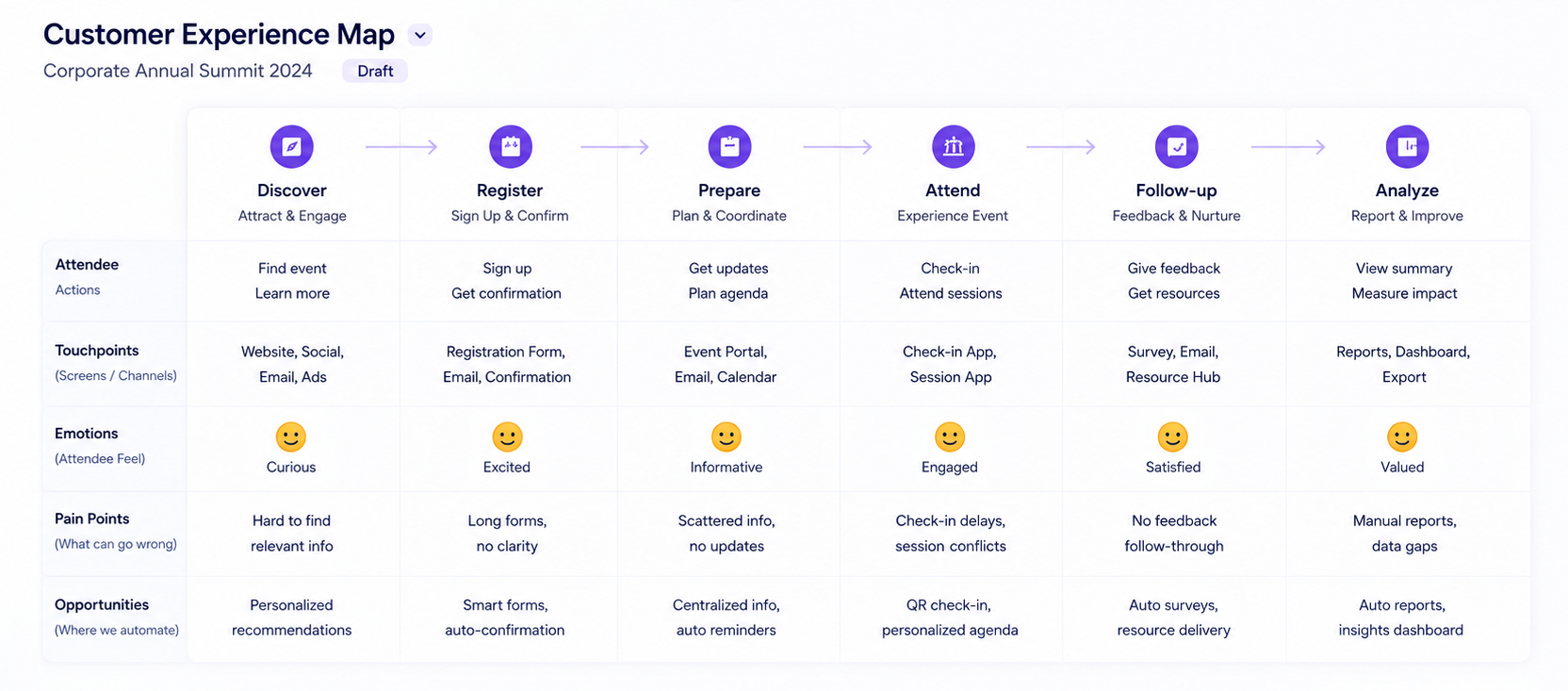
Event journeys were mapped lifecycle-by-lifecycle — surfacing where automation could remove manual effort while keeping event managers in control of every consequential moment.

Every screen, template, and confirmation message was anchored to a mapped moment. Every sign-off verified that the moment had been designed for, not assumed. The journey map was the canonical reference through every design and vendor review.
Wireframes translated event lifecycle into structured flows — dashboard, creation, execution, closure — across web, tablet, and mobile, with audit-ready timelines as a first-class output.


Every wireframe was traceable to a journey moment, and every IA decision was signed off before vendor execution. Storyboards were leveraged to align business, brand, talent acquisition, compliance, and vendor teams on what each moment had to feel like — before any pixels were committed.
Event scheduling · Speaker management · Compliance log — the eRoster trio
Reusable modules for RSVP, attendance, access control, and notifications — encoded into a system that scaled across regions, events, and stakeholders without renegotiating the fundamentals.

Auditability is not an output — it's a design property.
Every action is visible, traceable, and tied to ownership — auditability built into the event timeline rather than assembled after the fact, reducing operational risk without adding complexity.
Core UX standards and risk controls were centrally maintained, while implementation remained flexible at the domain level. Governance was lightweight and embedded into delivery workflows, focusing on systemic risks — accessibility, regulatory compliance, brand integrity, apply-flow friction — rather than surface-level design. Continuous improvement was driven through analytics and shared learnings.
Usability testing with event managers under realistic constraints validated guided creation, RSVP flows, and on-site coordination — refining the experience before scaling to additional teams and regions.
Role pages restructured so candidates established relevance within seconds. Headline, signal-bearing tags, and growth indicators surfaced before scroll.
Filters and sorting logic refined to align with the criteria candidates actually used — not the criteria the platform exposed by default.
Content hierarchy and CTAs improved so candidates entered the apply flow knowing what to expect. Confirmation messaging validated to reassure on submit.
Insights translated into refinements before launch — reducing rework during vendor implementation and surfacing systemic issues that would have appeared only post-release.
EROSTER replaced fragmented workflows with a single orchestration layer — improving organizer efficiency, operational confidence, and audit-readiness across pharmaceutical events.

Disconnected event tooling became a single orchestration layer — design moved from manual follow-ups to visible, audit-ready workflows.
EROSTER inverted the fragmented tooling model. Lifecycle-aware workflows, standardized modules, and audit-ready timelines reduced manual effort without removing human authority over consequential decisions. The platform reflected how people actually run medical events — clear, role-driven, dependable — so teams could focus on execution instead of managing the system itself.
Designing for regulated, multi-stakeholder events taught durable lessons about orchestration, automation guardrails, and audit-by-design.
Pharma teams weren't missing tools — they were missing orchestration. Building a unified layer over fragmented workflows delivered more value than any individual feature.
Every automation surface was designed so event managers retained final authority. Removing humans from consequential decisions would have broken trust and compliance simultaneously.
Building auditability into the event timeline — rather than assembling it after the fact — made compliance quieter and faster. The system carried the audit, not the manager.
Centering the Event Manager role grounded every decision in operational reality. Designing for the role that actually runs the lifecycle delivered far more value than abstract use cases.